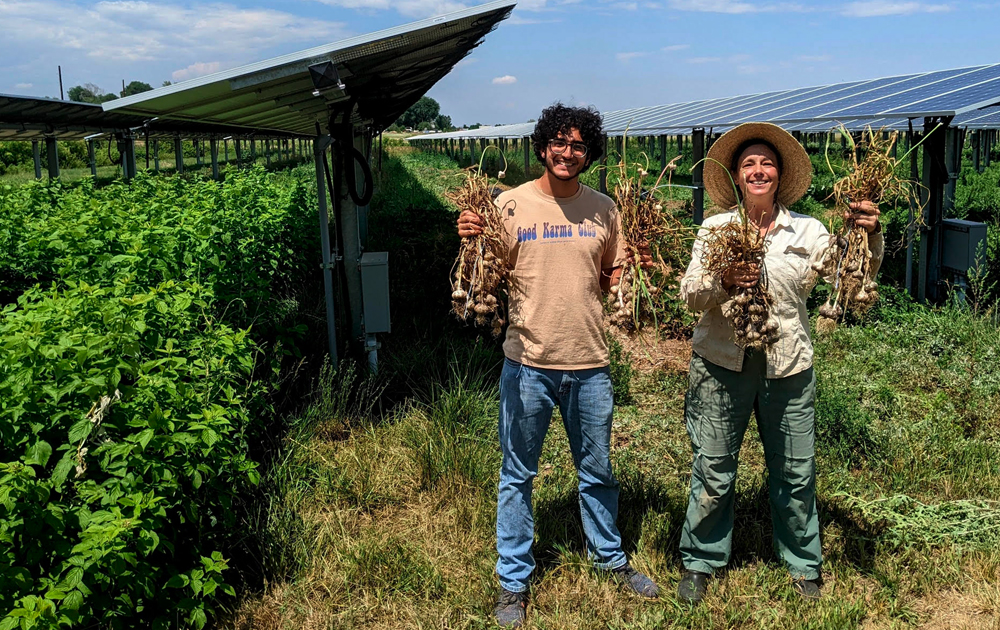
Abby Barrows is reimagining oyster farming from the mudflats of Downeast Maine. With loan support from CEI, Deer Isle Oyster Company is pioneering plastic-free aquaculture and building a more sustainable future for Maine’s working waterfront. [Image courtesy: Dan Rajter]
Abby Barrows is reimagining oyster farming from the mudflats of Downeast Maine. With loan support from CEI, Deer Isle Oyster Company is pioneering plastic-free aquaculture and building a more sustainable future for Maine’s working waterfront. [Image courtesy: Dan Rajter]
The Power of the Purse: Investing her money where it matters most
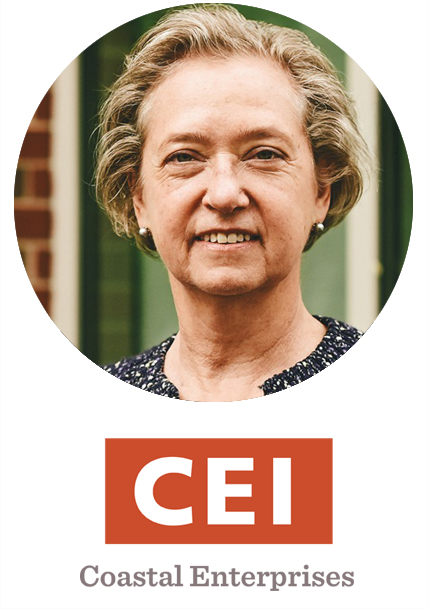
Betsy Biemann,
Coastal Enterprises, Inc. (CEI)
The term “impact investment” has only been around since 2007. Along the way it’s been called socially responsible investing, ESG and any number of other terms. However, the practice of putting your money where it will generate a financial return as well as a positive social, community or environmental impact – or at least not support detrimental enterprises – has been with us for generations.
Women have often been at the forefront of putting this concept into practice. Inspired by the Civil Rights movement and the War on Poverty, Catholic sisters created faith-based funds starting in the 1970s, investing their retirement assets in community development. In the 1990s, philanthropist Elizabeth Noyce made innovative investments with the goal of growing good jobs and advancing economic opportunity in Maine, including founding a local bank, Maine Bank & Trust. But the potential of women investors to use their assets for impact remains underrealized.
Women control increasing amounts of wealth in the U.S., and with it, are gaining the power to change what money makes possible. Yet while multiple studies have shown that on average, women investors outperform their male peers in investment gains, they invest significantly less. And according to a 2022 report from BNY Mellon Investment Management, if women started investing at the same rate as men, there could be more than $3.22 trillion of additional capital to invest globally.
The impact of those investments would be outsized, as once engaged, female investors are more frequently committed to investing in companies that are profitable while also advancing social welfare, shared prosperity, or environmental sustainability. Of that $3.22 trillion, an estimated $1.87 trillion (or 58%) would flow into investments that would help build a better future.
Beyond the stock market – direct investment opportunities
While the stock market is where most Americans are invested, per that same BNY Mellon report, more women proportionately than men see investing money in the conventional stock market, either directly or through a fund, as high risk.
They may also not see it as offering the kind of impact they are seeking – more than half (55%) of women in the U.S. would invest (or invest more) if the impact of their investment aligned with their personal values, and 53% would invest (or invest more) if the investment fund had a clear goal or purpose for good.
What they may not know is that there are an increasing number of other options that return a profit and leave people, communities and the planet with a brighter future.
I’ve long been interested in capital as a driver for good and the multiplier effect of community investments, particularly in rural communities. While I was in college, the divestment movement called for universities and companies to withdraw investments from South Africa. I saw how capital aligned with values contributed to the end of apartheid and the establishment of equal rights and voting privileges to all South Africans.
Early in my career, I saw revenue-generating enterprises connect people newly released from prison or in recovery with good jobs, expanding economic opportunity in low-income neighborhoods. And since I moved to Maine 20 years ago, I have seen firsthand the challenges that businesses in rural communities face in accessing capital. Here is just one statistic – less than 1% of venture capital goes to companies in rural regions, though rural businesses make up approximately 12% of U.S. enterprises.
A Small Good is a family-owned salumeria in Rockport, Maine, redefining traditional curing through fermentation with Koji.With support from a CEI loan, they’re crafting meats that honor heritage while exploring new depths of flavor. [Image courtesy of A Small Good]
As CEO of Coastal Enterprises, Inc. or CEI, I see daily how critical small business owners are for fueling economic mobility and contributing to the health of communities. In Maine, as is the case in most other rural places, small businesses drive the economy and employ the majority of workers. They typically purchase more products and services from neighboring companies, therefore circulating more cash locally.
A Community Development Financial Institution (CDFI), CEI finances and advises people who want to start and grow a small business, people who often face challenges accessing capital and non-financial resources that they need to be successful. After all, just because you are a talented baker does not mean that you have all the skills and knowledge that you need to run a successful bakery. We work with those companies located in low-income communities or that benefit people with low incomes, by building wealth through starting their own business and/or creating jobs that people with low incomes can access.
Many CDFIs offer opportunities for impact investors. According to a 2025 Report from Tern Strategies and Stepping Stone Partners, 99 CDFIs (including CEI) across 36 states offer investment notes to individuals, foundations and businesses, whose investment dollars are used to support investments in small businesses, affordable and workforce housing and community facilities like health clinics, YMCAs and arts organizations. Together, these offerings have attracted over $1.04 billion in capital from over 7,400 individuals, but this is only a tiny fraction of the estimated $1.57 trillion impact capital under management globally.
Impact-focused venture capital (VC) firms offer another opportunity for people and institutions seeking to channel their capital in ways that change the world for the better. Some impact VCs invest in diversified portfolios of businesses that aim to create positive impact across a broad range of categories, such as Better Ventures’ requirement that its portfolio companies address at least one of the UN’s Sustainable Development Goals. Others focus on investing in businesses tackling specific issues like climate, gender or racial disparities and health. And Community Development VC firms invest in founders or communities with low incomes that are underserved by traditional capital markets, often in tandem with other impact goals. Over 30 years ago, CEI created a CDVC subsidiary, CEI Ventures, which has since raised and managed five CDVC funds that have invested approximately $47 million in 74 growth-oriented businesses in Maine and the Northeast, leading to the creation of 2,818 new jobs and the employment of over 5,330 people, including more than 2,540 jobs targeted for people with low-to-moderate incomes.
Among the CEI Ventures portfolio companies with women founders and co-founders, HighByte is a growing industrial software company in Portland serving global manufacturers. [Image courtesy of Elle Darcy]
There are also female-led or staffed VC Firms. Currently, less than 10% of the VC decision-makers are female and only 11.5% of VC dollars went to female-founded and mixed-gender teams. Many women leading VC firms have been underestimated by business and financial institutions in their own lives, and are motivated to mentor and invest in companies led by or supporting other underestimated people, especially women, or that produce products or services that are overlooked or undervalued by conventional fund managers.
While many CDFI investment offerings are open to all investors, angel investment and investment as a venture firm LP is typically limited to individuals who are accredited investors, in addition to foundations and other institutional investors.
Influencing institutional investment to multiply impact
For women who sit on the boards or investment committees of an organization with an endowment, additional opportunities arise. Grants have long been the primary tool used to advance the missions of private and community foundations, while their assets typically sit in traditional investments, missing opportunities to advance their missions through strategic investments or sometimes even working at cross purposes to their goals. Thus many foundations work to solve some of our society’s most difficult problems with one arm tied behind their backs, leveraging only 5% of their total assets annually to advance their mission, and limiting their impact potential. Similarly, while numerous colleges and universities have taken steps to avoid investing endowment assets in negative or detrimental industries, they have been slower to align their investment of endowment assets positively with their educational and public service missions.
At the Rockefeller Foundation in the late 1990s, several of my colleagues and I helped to create that Foundation’s first impact investment fund, investing in a variety of enterprises that sought to advance the Foundation’s goals via the private marketplace. Representing a program seeking to expand economic opportunity in large U.S. metro areas, I was able to make impact investments in two CDVC funds: Boston Community Capital (now Blue Hub) and Silicon Valley Community Ventures (now Pacific Community Ventures). One of BCC’s investments was in a start-up founded by two woman who sought to expand access to personal transportation without putting more cars on the road, leveraging the early internet’s ability to enable the sharing of resources. The company was called Zipcar.
Later, as a Board member of the Elmina B. Sewall Foundation, a place-based foundation in Maine, this foundation took its first steps to leverage its corpus in support of its mission “to improve the well-being of the people, animals and environment in Maine, while fostering social equity and community resilience.” These steps included developing an investment policy goal to achieve 100% values-aligned investment and to invest at least $18 million supporting the Foundation’s mission in Maine over a five-year period. Impact investments that followed have included several in innovative and impactful food companies like Maine Grains and Tootie’s Tempeh.
Whether the assets come from an individual or institution, whether investing a small amount or millions, there is a breadth of investment tools that can contribute solutions to community challenges while bringing financial returns to the investor. As someone who has seen the power of impact investment from both the investor and investee perspectives, I encourage all with funds to invest to put a portion of your dollars to work on for the people, places and causes that matter to you. And you don’t even have to be a woman to do it.
Article by Betsy Biemann, the Chief Executive Officer of Coastal Enterprises, Inc. (CEI), a Maine-based community development financial institution with a mission to build just, vibrant and climate-resilient futures for people and communities in Maine and rural regions. Prior to joining CEI, Betsy led the Maine Food Cluster Project of the Mossavar-Rahmani Center for Business and Government at Harvard University and served for seven years as President of the Maine Technology Institute, which invests in Maine companies and initiatives seeking to grow high-potential sectors of Maine’s economy. Prior to that, she was an Associate Director at The Rockefeller Foundation in New York City, where she worked for nine years managing a national grant program and impact investment portfolio aiming to increase employment and economic mobility in low-income communities. She started her career as a Warren Weaver Fellow at the Rockefeller Foundation then working in international development, with a focus on how girls’ education, smallholder agriculture and partnerships could expand economic opportunity in sub-Saharan Africa.