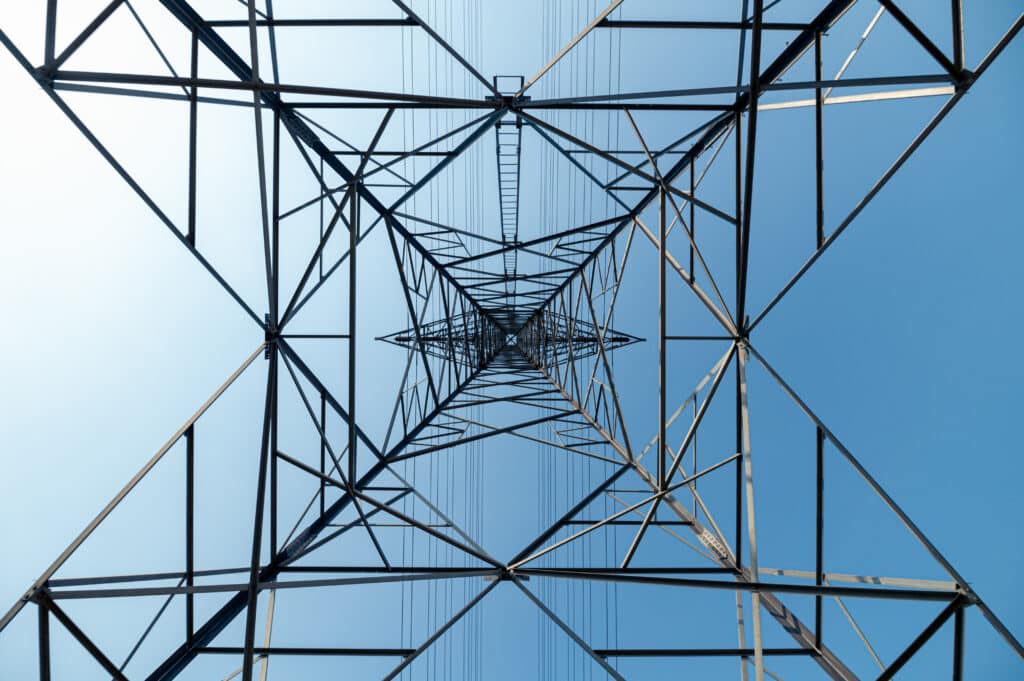
Powering the Future: Investing in Grid Infrastructure
By Justin Winter and Harry Boyle
Impax Asset Management
The need for expanded, upgraded, and more sustainable infrastructure is creating a range of high-quality investment opportunities.
Population growth, demographic shifts, and technological innovation are driving demand for new systems. Existing assets need to be made more resilient to rising pressures from climate change, security threats, and less predictable usage. At the same time, infrastructure nearing the end of its useful life must be replaced.
Sustainable infrastructure encompasses the supply of basic resources, such as energy, water, and food, as well as services society relies on, such as healthcare, finance, and digital connectivity.
Within this, electricity infrastructure stands out as a critical enabler of modern life and economic growth. The electrical grid is the backbone of electrification, digitalization, and decarbonization. As demand for electricity accelerates and more renewable generation comes online, the grid must expand and become smarter.
This article explores what the grid really is, why it is under unprecedented strain, and how long-term structural trends—from ageing assets to climate adaptation—are driving compelling investment opportunities. We also highlight a case study to illustrate how investors can gain exposure to this transformative theme.
1. What is the grid?
Electrical grids are the vast, interconnected systems that deliver electricity from where it’s generated to where it’s consumed.
At its core, the grid comprises three main components: generation, transmission, and distribution. Generation includes traditional power plants and renewable sources like wind and solar. Transmission involves high-voltage lines and substations that move electricity across long distances. Distribution brings power to end users, in homes and businesses, via transformers and lower-voltage lines.
Investors have multiple entry points into this ecosystem. Utilities own and operate the grid, often under regulated frameworks intended to manage return variability. Industrial manufacturers supply the “picks and shovels” used to build out the grid. These include transformers, cables, and switchgear, as well as an increasing number of components for decentralized generation, such as batteries. Software and technology firms also play a growing role, enabling smart grid functionality, predictive maintenance, and cybersecurity.
The investment case for grid infrastructure appears to be supported by several long-term structural trends.
Firstly, demand is soaring. Global electricity consumption is expected to double by 20501, fueled by the electrification of transport, heating, and industry. As economies grow and digitalization accelerates, the grid must expand and become more flexible.
Secondly, ageing infrastructure is reaching the breaking point. In the US, the average power transformer is over 40 years old2. These assets (and others across the grid) are operating beyond their intended lifespan, increasing the risk of outages and inefficiencies. Replacement and upgrade cycles are no longer optional — they’re critical.
Thirdly, grids must become more resilient to the impacts of extreme climate-related weather events. Heatwaves, storms, and floods are testing the reliability of electricity grids just as energy demand surges, especially for cooling and heating. For instance, air conditioning and fans are ~10% of global electricity use, and air conditioning demand could triple by 2050 absent stronger efficiency standards3. Recognizing this urgency, political support for grid modernization is strong and bipartisan. In the US, the Infrastructure Investment and Jobs Act has earmarked ~$29 billion for the electricity grid4, while Europe needs ~€584B of grid investment by 2030 per the European Grid Action Plan5. These are multi-decade commitments to energy security, climate resilience, and decarbonization.
From a financial perspective, grid infrastructure may present opportunities for both resilience and growth. Regulated utilities can offer inflation-linked revenue models, while equipment suppliers and digital enablers are positioned to benefit from margin expansion and scalable business models. As logistical, economic, and climate-related pressures evolve, interest in investment appears to be increasing.
3. Stock Example: NextEra Energy
The specific securities identified and described are for informational purposes only and do not represent recommendations.
NextEra Energy6, headquartered in Florida and listed on the New York Stock Exchange, is the largest clean energy company in the United States, with a market capitalization exceeding $160 billion7.
The company operates through two primary businesses: Florida Power & Light (FPL), a regulated utility serving approximately 12 million people, and NextEra Energy Resources (NEER), which develops renewable energy projects, battery storage, and smart grid solutions across North America8.
This structure combines a regulated utility — with potential for more predictable revenue streams — with a renewables developer, resulting in a diversified asset base. NextEra has set a target of achieving net-zero emissions by 2045, supported by detailed implementation plans9. NEER accounts for nearly 20% of all renewable energy development in the US, with a growing pipeline of projects that could create future opportunities10.
We believe the company’s growth is supported by regulatory frameworks, project economics, and rising electricity demand, including from data centers that are driving the AI boom. Over the past two decades, NextEra has reported annual earnings growth11 and targets ~10% annual dividend growth through at least 202612. To learn more about Impax’s Global Infrastructure ETF, please visit:www.etf.impaxam.com
Article by Justin Winter, Senior Portfolio Manager at Impax Asset Management, and Harry Boyle, Portfolio Manager at Impax Asset Management
Justin Winter is a co-Portfolio Manager of the Impax Water and Sustainable Infrastructure strategies. Justin analyses businesses globally with a particular focus on water, other environmental markets, and sustainable infrastructure, across the industrials, utilities, and materials sectors. Justin is also the Co-Portfolio Manager of a bespoke environmental and water strategy managed by Impax for a Dutch asset manager.
Before joining Impax in 2009, Justin worked as an investment analyst covering global equities for an Australian ethical investor, as a research analyst covering renewable energy at what is now BNEF (Bloomberg New Energy Finance). Before moving into finance, he was a consulting engineer working on major infrastructure projects, including preparing Environmental Impact Studies and conducting water supply analysis and flood modelling.
He holds a bachelor’s degree in Engineering from the University of Queensland and a master’s in commerce from the University of Sydney.
Harry Boyle is a co-Portfolio Manager of the Impax Sustainable Infrastructure strategy and the Impax Water Strategy. He joined Impax in 2017, having previously worked for the firm as a consultant assessing portfolio carbon risk. Initially, he worked as a Portfolio Specialist, gaining in-depth knowledge of investee companies and the investment process. In 2021, Harry began work on Impax’s Sustainable Infrastructure taxonomy before becoming a Portfolio Manager at launch in October 2022. Harry joined the Water strategy Portfolio Management team on 1 July 2024, having served as the lead analyst on several key holdings in the strategy for several years prior, with a primary focus on regulated utilities and infrastructure companies.
Harry began his career in 2006 as an analyst at Bloomberg New Energy Finance, where he helped investors understand the evolving dynamics in energy, carbon, and power markets. He subsequently worked at Aurium Capital as an investment manager investing debt into infrastructure projects before becoming an independent consultant raising capital for early-stage energy businesses.
Harry has an MA in Modern History from the University of St Andrews and an MSc in Finance from London Business School.
Footnotes
U.S. Energy Information Administration: International Energy Outlook, October 11, 2023. ↩︎
Utility Business, “Transformative Times: Update on the U.S. Transformer Supply Chain,” July 12, 2022. ↩︎
IEA: Air conditioning use emerges as one of the key drivers of global electricity-demand growth, May 14, 2018. ↩︎
S&P Global: The Opportunity for U.S. Infrastructure, September 17, 2021. ↩︎
European Commission: In focus—EU investing in energy infrastructure, October 15, 2024. ↩︎
NextEra Energy was 3.47% of the Impax Global Sustainable Infrastructure Fund as of 12/31/25. The holdings referenced pertain to the predecessor mutual fund. On 2/2/26, the Impax Global Sustainable Infrastructure Fund was converted into the Impax Global Infrastructure ETF. Fund holdings are subject to change. ↩︎
NextEra Energy: Company Overview, undated web page (accessed Dec 2025). ↩︎
NextEra Energy: Zero Carbon Blueprint Update (PDF), June 14, 2022. Company target covers Scope 1 and 2 emissions. Scope 1 emissions are direct greenhouse (GHG) emissions that occur from sources that are controlled or owned by an organization (e.g., emissions associated with fuel combustion in boilers, furnaces, vehicles). Scope 2 emissions are indirect GHG emissions associated with the purchase of electricity, steam, heat, or cooling. ↩︎
S&P Global: NextEra tops leaderboard of renewable projects planned in energy communities, May 22, 2023. ↩︎
Annual earnings growth refers to the percentage increase in a company’s net income over one year. Earnings growth is not a measure of future performance. ↩︎
NextEra, Investor Relations releases, February 2024 and February 2025. ↩︎
Important Information
Investing involves risk and principal loss is possible. Past performance cannot predict future results, and diversification cannot assure a profit or protect against loss in a down market. Holdings are subject to change. Dividends are not guaranteed and may fluctuate.
Equity investments may decline in value due to both real and perceived general market, economic, and industry conditions.
Investing in foreign-denominated and/or domiciled securities may involve heightened risk due to currency fluctuations and economic and political risks, which may be enhanced in emerging markets. Sustainability risks may have material negative effects on an investment’s value and the portfolio’s performance. Sustainability risks can be environmental, social, or governance in nature, such as severe climate events, operational disruptions due to labor issues, or internal control failures in investee companies.
ETFs are subject to additional risks not applicable to conventional mutual funds. Shares of any ETF are bought and sold at market price (not NAV) and are not individually redeemed from the Fund. Brokerage commissions will reduce returns.
Impax funds are distributed by Foreside Financial Services, LLC. Foreside Financial Services, LLC is not affiliated with Impax Asset Management LLC.
You should always consider Impax funds’ investment objectives, risks, and charges and expenses carefully before investing. For this and other important information, please obtain a fund prospectus by calling 800.767.1729 or visitingwww.impaxam.com. Please read the prospectus carefully before investing.