The Capital Farmers Actually Need for Regenerative Agriculture
By Elizabeth Candelario
MAD Agriculture
How Mad Agriculture’s Regenerative Catalyst Fund and Mad Capital are Closing the Finance Gap in Regenerative Agriculture
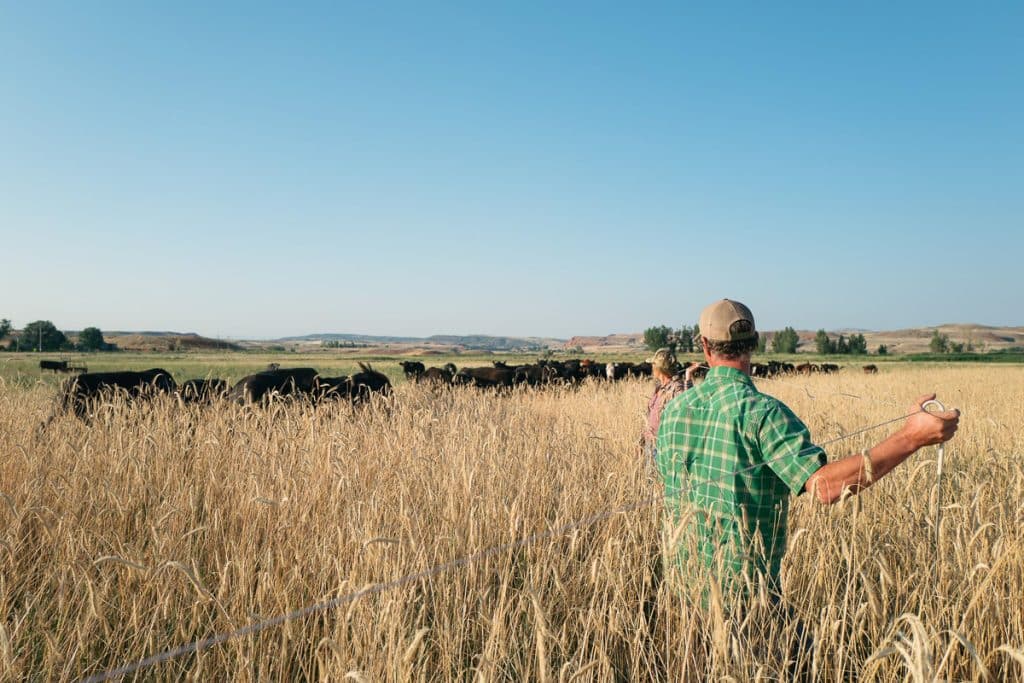
RC Carter has been ranching in Ten Sleep, Wyoming, for as long as he can remember. Carter Country Meats is a fourth-generation direct-to-consumer business running across 40,000 acres of public and private land in the Big Horn Basin. RC raises grass-fed and grass-finished beef cattle based on sound grazing management practices that build soil function, biology, and native ecology over time. Three years ago, he attended a convention in Denver and found himself in a conversation with Phil Taylor, Mad Agriculture’s co-founder and CEO, about a vision for transforming how regenerative farmers and ranchers access the capital they need to thrive. “Most people’s eyes glaze over,” RC recalled, “but Phil had this sparkle.”
Farmer RC and Annie Carter – Photograph by Rachael Yarbrough from Mad Agriculture
Fast-forward to 2025, and that sparkle has translated into a $20,000 grant from Mad Agriculture’s Regenerative Catalyst Fund that helped RC switch to virtual fencing across his operation. This improves pasture recovery, protects sensitive areas, encourages even grazing and manure distribution, and supports healthier soils and plant communities across the landscape. “Implementing this project,” RC said, “has given us a massive amount of hope.”
Hope. It’s an unusual word to hear from a rancher when talking about finance. But that’s what happens when capital is designed to meet farmers where they actually are — not where conventional lenders think they should be.
The regenerative agriculture movement has gained significant momentum over the past decade, but one of its most persistent obstacles is rarely discussed in the same breath as soil health or biodiversity: the structural failure of conventional finance to support the very farmers who want to farm better.
The problem is particularly acute for farmers transitioning to organic or adopting regenerative practices. To pursue organic certification, farmers must eliminate all prohibited chemicals for a minimum of three years on their land, a period during which yields typically decline, costs rise, and the price premium doesn’t kick in until year four. Referenced as the “J-curve,” this reality is typically unacceptable to conventional lenders.
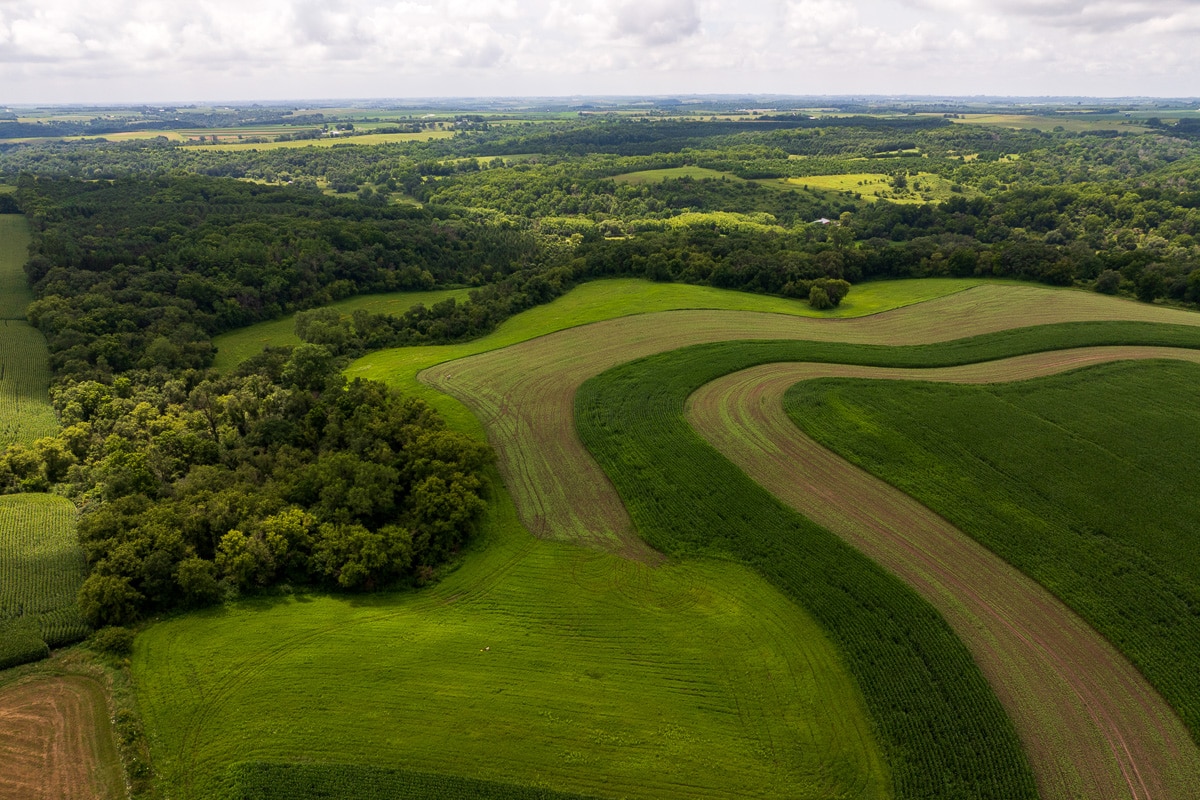
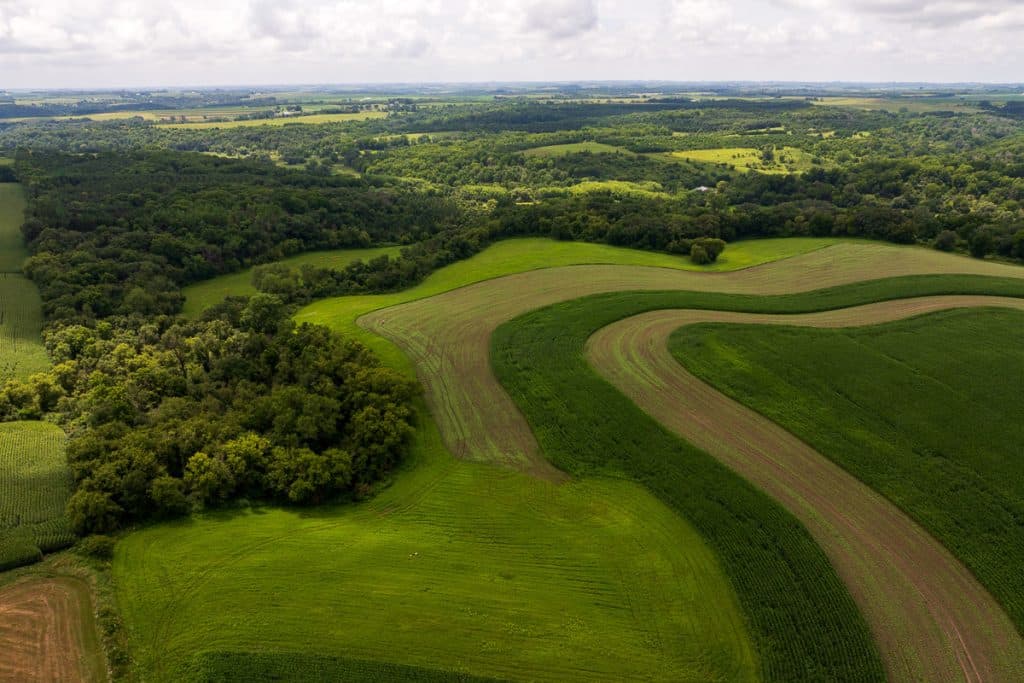
Andrew Barsness knows this firsthand. He was 21 and a college freshman when his grandparents passed away, leaving the family farm in Grant County, Minnesota, to his mother and aunt. Andrew stepped in, renting 60 acres from them in 2011 while finishing his degree. In 2016, Andrew began transitioning the farm to organic, and he purchased the farm from his family in 2020.
Farmer Andrew Barsness – Photograph by Nina Riggio from Mad Agriculture
During those transition years, when he turned to conventional lenders for support, the doors closed. “I might as well have been growing bananas and oranges instead of corn and soy,” he said. “Traditional lenders just don’t understand the switch to regenerative.” In 2023, Mad Capital provided long-term, customized financing. Today, Andrew manages approximately 900 acres, with 270 certified organic and the remainder in active transition.
Mad Capital: Finance Built for the Transition
Mad Capital, a public benefit corporation (PBC) and mission-driven partner of non-profit Mad Agriculture, shares its intention of creating a regenerative revolution in agriculture. Where conventional lenders see risk in organic transition, Mad Capital sees opportunity.
Mad Capital offers operating loans, real estate loans, and transition loans specifically tailored for farms and ranches that are either certified organic or transitioning. Loans are designed with terms reflective of the realities of organic farming, including interest-only structures designed to help farmers navigate the J-curve without being crushed by debt service during their lowest-revenue years. Mad Capital also provides something conventional lenders rarely offer: connection to technical assistance, markets, and a community of values-aligned farmers who understand what it means to farm regeneratively.
The numbers reflect a growing movement. Mad Capital currently finances 175,317 acres, with 81.3% certified organic and 21.9% certified to the Regenerative Organic Certified standard, the most rigorous and comprehensive regenerative certification. For Andrew, the relationship is more than financial, it is a partnership rooted in shared values. Rather than being treated as a risk to be managed, he was recognized as a farmer doing exactly the work the world needs more of.
The Regenerative Catalyst Fund: Catalytic Capital for Resilience and Growth
Mad Capital’s loan products start at $500,000, the scale needed for larger farm acquisitions, equipment purchases, and full-operation transitions. But the regenerative farming community includes farmers at every scale, and many of their most critical needs don’t fit that minimum. Enter Mad Agriculture’s Regenerative Catalyst Fund (RCF).
The RCF provides grants and zero-interest loans to existing and transitioning regenerative and organic farmers and ranchers to implement specific projects that build resiliency and catalyze growth, both on the land and in the business. Often, financing is coupled with technical support. The RCF’s largest single investment to date has been $35,000, but the impact at every scale has been transformational.
Consider Bob Knox of Knox Farms LLC and Kevin and Kimberly Hansen, country neighbors farming in Winifred, Montana. Bob is a fourth-generation farmer with a cow/calf operation who grows both organic and conventional broad-acre crops. Kevin and Kimberley farm 100% certified organic on a combination of family-owned and leased land. The combined farms’ organically managed land is pushing 3,000 acres, both grow lentils for the storied processor Timeless Seeds (owned by Mad Agriculture’s second mission-driven partner, Mad Markets PBC) and both faced the same structural challenge.
Vilicus Farms in Havre, MT Photograph by Jane Cavagnero from Mad Agriculture
Without on-farm grain cleaning infrastructure, Bob and Kevin incurred significant additional freight and processing costs that reduced net returns, constraining their ability to reinvest in regenerative practices. The economics were quietly eroding everything else they were doing right.
Through the RCF, Mad Agriculture provided $10,000 in grant funding and $15,000 in a zero-interest loan to support the shared purchase of a grain cleaner that will reduce freight costs and improve net income. In addition, it demonstrates that shared infrastructure between neighboring farmers is a replicable, farmer-led model that builds regional capacity, peer learning, and long-term resilience.
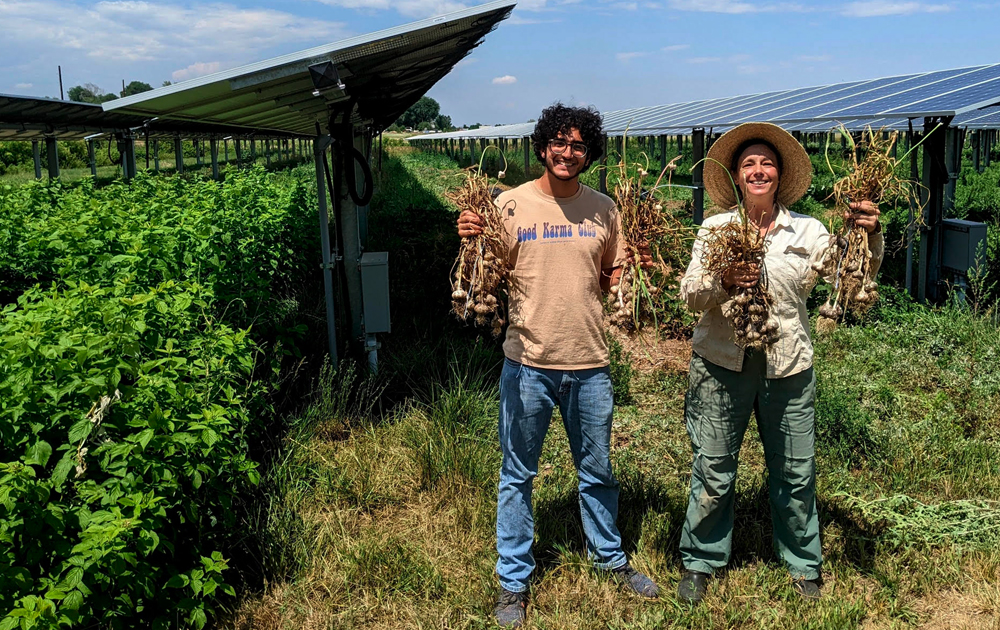
Half a country away, the Wonderful People Microfarm (WPMF) with a team led by Tonya Lewis, Chris Cowley, and Maxwell Patterson are farming 21 acres in Goodlettsville, Tennessee.
Through hands-on learning alongside experienced farmers and producers, WPMF empowers youth, women, BIPOC individuals, and other marginalized groups with knowledge in regenerative farming practices that protect natural resources and revitalize native ecosystems. The WPMF team secured a USDA Equity in Conservation grant to launch their regenerative farming efforts, but a critical structural barrier stood between them and a sustainable revenue model: local ordinances required on-site produce washing and packing facilities to legally supply restaurants and institutions. Without a wash/pack station, the CSA and institutional channels they needed to sustain the farm’s educational mission were simply out of reach.
Recognizing this infrastructure gap, a $10,600 RCF grant provided WPMF the catalytic funds they needed to build the wash/pack station. Mad Agriculture also connected them with an organic agronomy consultant from the Rodale Institute to provide ongoing technical assistance.
“Working with Mad Agriculture has been a game-changer for Wonderful People Microfarm,” Tonya said. “They supported us in securing funding for our wash/pack station, offered thoughtful technical assistance with crop planning and business development, and connected us to an incredible network of farmers and resources. Their commitment to farmer success and community is real.”
A Complete Capital Ecosystem
What Mad Capital and Mad Agriculture’s RCF together represent is something the regenerative agriculture sector has long needed: a capital ecosystem that reflects how farmers actually farm and delivers what farmers actually need. Mad Capital addresses the larger-scale financing gaps, while the RCF addresses the smaller, but equally important gaps that can catalyze steps towards regeneration.
For investors of many stripes, from foundations to pension funds, Mad Capital demonstrates what patient, mission-aligned capital looks like in practice. It doesn’t ask farmers to conform to the assumptions of conventional finance but instead meets them at the junction of their vision and their need. And it builds something that neither a spreadsheet nor a soil test can fully capture: the confidence of a farmer who believes the system is working with them, not against them.
For individual donors, foundations and companies, the RCF provides exactly the kind of financing that can mean the difference between a farm that makes it and one that doesn’t. Donors can contribute tax-deductible gifts directly to the fund, knowing that 100% goes to work on farms via grants and zero-interest loans.
For corporate partners, the RCF can also offer something rarer: the ability to contribute to a fund dedicated to the outcomes that matter most to their business and their values. An outdoor apparel company supporting biodiversity on working landscapes. A brewery that counts its farmers amongst its customers. A regional institution that cares deeply about the community it serves. The RCF is flexible enough to hold all of it, and Mad Agriculture has the farmer relationships, scientific capacity, and on-the-ground presence to make sure that investment translates to real progress on the farm.
The regenerative agriculture movement has no shortage of vision. What it has always needed is finance that matches it. That’s the sparkle. And for a growing community of farmers from Montana to Tennessee to Wyoming, it’s giving them something conventional lenders never could. It’s giving them hope.
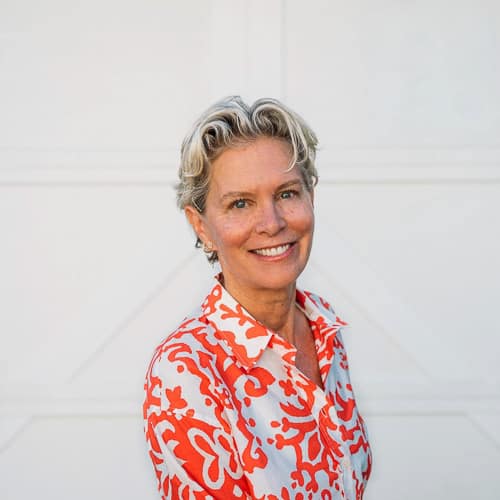
Article by Elizabeth Candelario, who has spent the majority of her career working at the intersection of food, climate, and agriculture.
She is currently the Chief Strategy Officer for Mad Agriculture, a non-profit that works with US farmers to help them transition from conventional to organic and regenerative agriculture by providing agronomic know-how, operating capital, and market access.
In her prior role as President of Demeter USA, the domestic certifier of Biodynamic farms and products, she focused on expanding awareness and markets to enhance returns for regenerative farmers. She began her career in the California wine industry, where she spent nearly two decades in increasingly senior positions, with a growing emphasis on the environment. Elizabeth speaks frequently at national food and environmental conferences and has written extensively on agriculture and climate change. She can be contacted at- elizabeth@madagriculture.org