Equal Exchange Turns 40: Farmers, Food and Fair Trade

History: Equal Exchange started with an idea: what if food could be traded in a way that is honest and fair, a way that empowers both farmers and consumers? Founders — Rink Dickinson, Jonathan Rosenthal and Michael Rozyne — asked this question as they envisioned a trade model that values ​each part of the supply chain​. They decided to take a big risk and started importing fairly-traded coffee from Nicaragua in 1986, despite a US embargo against the Sandinista government. A new business was born from this bold act of solidarity with Latin American farmers and Equal Exchange grew from there into the current Equal Exchange Ecosystem of cooperative businesses made up of 120+ worker owners fairly trading $80M annually.
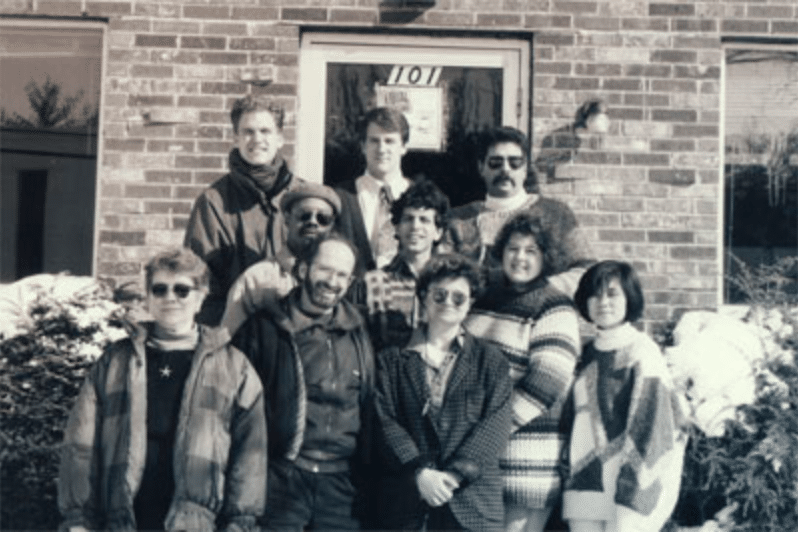
Equal Exchange Early Years

Small Farmer Grown: Equal Exchange partners with farmer cooperatives who are democratically organized, sharing resources and decision-making among their members. Collectively, they gain crucial market access and decide how to invest fair trade and organic premiums in their communities. Equal Exchange currently sources from over 40 small farmer organizations around the world. 
Trade Model: Equal Exchange was founded as a for-profit but “not a for-profit maximizing” corporation and was organized as a worker-owned coop. The idea was to operate in the marketplace and show that coffee could be bought fairly from small farmers and sold to consumers at the grocery store at fair prices. The model is based on a lower profit margin made up for in volume sales. The more green coffee Equal Exchange can purchase from farmers, the more economical the process is for the co-ops that buy and process the green coffee from their farmer members. The more green coffee Equal Exchange can import and manufacture, the more economical the process is of shipping, roasting, packing, and distributing. Equal Exchange sells directly to a network of independent natural food and cooperatively owned grocery stores. Through these direct relationships, Equal Exchange products like coffee, chocolate, tea, fresh and dried fruits and nuts, Palestinian olive oil, and dates can support independent and community-owned food stores with products that reflect their values and their economic models.

Capital Model: Coffee is harvested once a year, and Equal Exchange buys by the container (40,000 lbs.) Equal Exchange buys millions of pounds of beans and needs millions of dollars of capital to buy them. Coffee co-ops need money to purchase green beans from their farmer members, and farmers need income throughout the year. Equal Exchange understood from the start that capital and control of money were going to be as important as worker ownership and control of the business. 

Thanks to out-of-the-box thinkers like Clark Arrington, a capital model was developed that integrated outside investors with worker owners in a unique way. Class B preferred non-voting shares were sold to outside investors. Early investors were warned they might lose their money on the idea of some idealistic people buying coffee from Nicaraguan farmers as a political protest, but the founders managed to raise $100K from friends and family. Investors were aware of the risks and the conditions: 

• No voting shares or seats on the board. The board of Equal Exchange is composed of worker owners who purchase and hold all Class A voting shares. 

• No guaranteed dividend. Investors like worker owners share in the profitable years of Equal Exchange through higher dividends and share the risks in lower profit years with lower dividends (Note: the average dividend has been 5% over time)

• No windfall from the sale of the company because Equal Exchange has a no sell-out clause and no capital gains because the share value has remained the same over time

This capital model is as radical today as it was in the 1980s and maybe even more so. Money often means power, and we have all seen the negative effects of private equity and maximizing returns for shareholders, both of which have led to massive consolidation in the food industry.
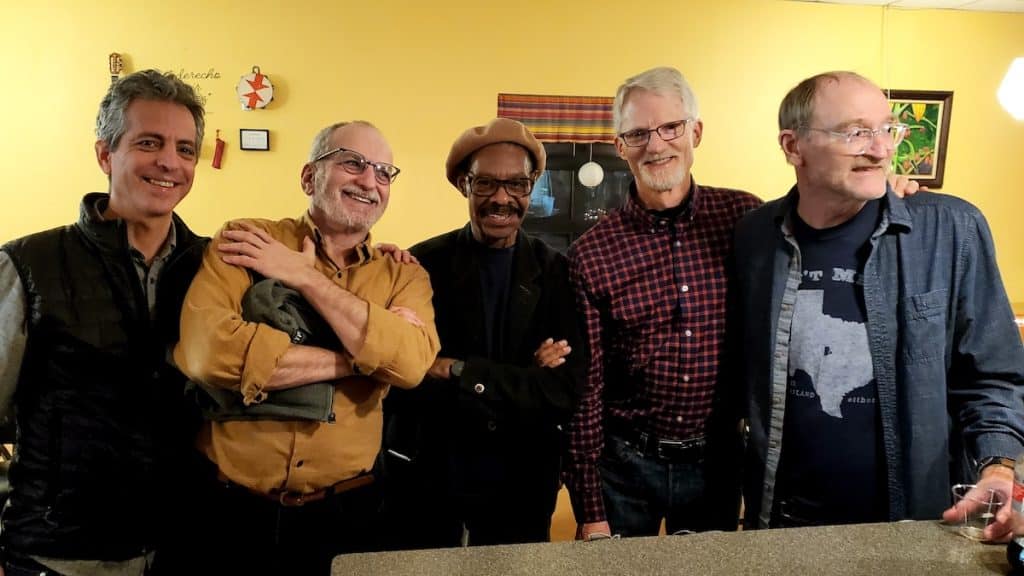
Equal Exchange founders – Jonathan Rosenthal, Michael Rozyne, Clark Arrington, Rob Everts and Rink Dickinson

Another source of alternative capital is worker owners. In profitable years, worker owners receive a % of the profits in “patronage”, which is profit sharing. The board votes on the % distributed in cash and the % held by Equal Exchange in an internal capital account. This internal capital is converted to Class B shares, so worker owners, like outside investors, receive dividends. Worker owners together are the largest owners of Class B stock, totaling roughly $1M.


Sign up for our biweekly Ejournal

Global Events Calendar

Latest Cimate & Energy News

Featured Video

Sustainability News from 3BL

Today, Equal Exchange has over 500 investors (not including worker owners) and, together with low-interest mission loans (short-term promissory notes at 3-5% interest), has a diversified capital stack of over $15M. In addition, we have access to lines of credit through banks and other financial institutions of $6.5M at market interest rates (6-8% currently).

This capital is constantly leveraged by buying short and long-term inventory from producer co-ops. Green coffee is our biggest inventory purchase and might total from $5-$10M. Some of that might be in actual inventory, and some of it might be in pre-harvest financing that is extended to producer co-ops for farmer member support and income throughout the year between harvests. This also allows us to pay for inventory when we receive it, whether that is tea, bananas, or chocolate. We use our lower-interest capital to support farmers and the institutions that support them, versus using money as power or a negotiating or profit-maximizing tool. 

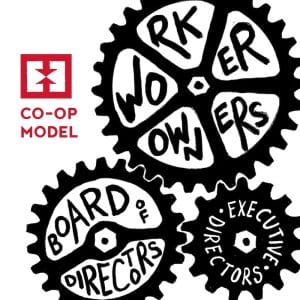
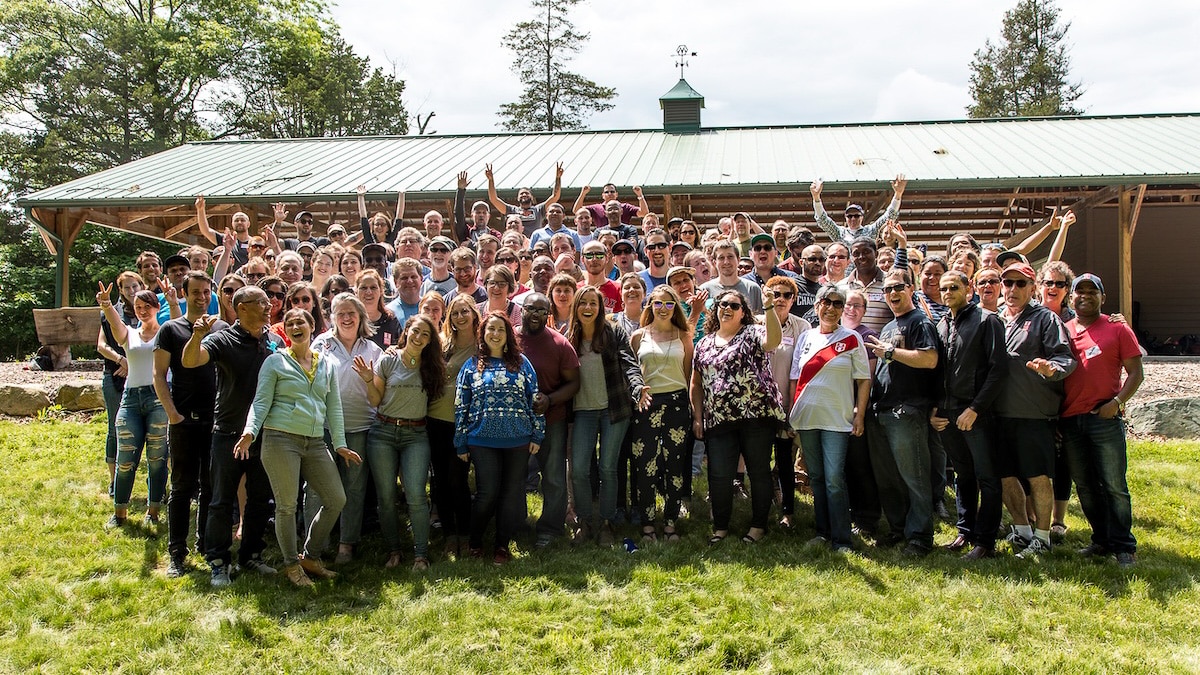
Ownership Model: At Equal Exchange, we all walk around like we own the place. That’s because we all do! Our co-op has over 100 worker-owners, each with an equal stake — and an equal vote — in our business. We are organized as a democratic worker co-operative, one of the largest in the country.

A worker cooperative is an alternative for-profit structure based upon standard democratic principles designed to bring to the workplace many of the rights and responsibilities that we hold as citizens in our communities. These principles include one-person/one-vote equality; open access to information (i.e., open-book management); and the equitable distribution of resources (such as income).

A worker co-op is not owned by outside shareholders or a small group of founders or partners but by all the employees in equal portions. Top-level managers and entry-level employees alike own an identical share and receive an equal share of any profits or losses. These “worker-owners” both elect the Board of Directors and fill six Board seats. The Board, in turn, is responsible for hiring and supervising management. Consequently, a circle is formed, as in American civic democracy, of everyone being accountable to someone else.

The delegation of responsibilities is very much like that of conventional firms, which allows for efficiency — except that at Equal Exchange, those at the “bottom” of the organizational chart are, as owners, also at the “top” of the same chart.

Global Ecosystem: As Equal Exchange watched our fellow Alternative Trade Organizations (ATOs) face economic challenges over the past decade, we have been compelled to act to save and support as many as we could.

In 2008, we acted to invest high-risk capital intoOké USA, the only fair trade produce company in the country, and an organization that was effectively in bankruptcy and currently trades $15M of Equal Exchange fair trade bananas and avocados annually. In 2013, and then again in 2017, we invested in sister ATOEqual Exchange UK to keep the doors open, and now we are processing Equal Exchange-branded dried fruit and nuts and manufacturing tea in the UK. 

In 2014, we first invested in La Siembra, a Canadian worker cooperative, to keep their ATO model alive instead of becoming effectively demutualized and transitioning from an ATO to a brand at the service of venture capitalists. As of January 1, 2026, Equal Exchange fully merged with La Siembra and transitioned Canadian Member ownership to worker-owner shares in Equal Exchange. Read more about that here 

Today, Equal Exchange US and UK, La Siembra, and Oke are all in business, profitable, and together sell over $80 million annually.

We have created an ecosystem of worker-owned ATOs that walk their own path, but learn together and reinforce each other. 
Food is a for-profit industry, coming at a cost to farmers, consumers, and the planet. Help us build a democratic food system that belongs to the people, not corporations. How can Citizen-Consumers participate in creating a more just system of trade? What can we dream up and leverage collectively? Join us for the opportunity to have your voice and ideas included and come celebrate 40 years of Equal Exchange at our Annual Summit on June 12, 2026, at Wheaton College in Massachusetts.


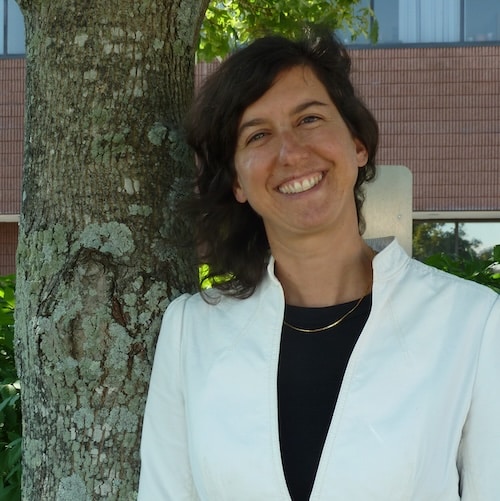
Article by Nicole Vitello, Vice President and Capital Coordinator at Equal Exchange.

After studying International Development at American University, Nicole founded her own organic farm business, Manic Organic, which she operated successfully for 10 years in her home state of Rhode Island. In 2008, Nicole joined Equal Exchange as a sales rep inspired by the economic model of trading directly with small farmers internationally. In 2011, Nicole became president of Oke USA, the fresh produce subsidiary of Equal Exchange, and grew the $3M business to trading $16M of organic fair trade bananas from Ecuador and Peru and avocados from Mexico. Nicole rejoined the Equal Exchange leadership team in 2023 as a Vice President.

Global Events Calendar

Featured Podcast

Sustainability News from 3BL

Sign up for our biweekly Ejournal

Global Events Calendar

Latest Cimate & Energy News

Featured Video

Sustainability News from 3BL

Latest GreenMoney News

Latest GreenMoney News

Impact investing

Electric_tower_and_blue_sky

Food & Farming

Agrivoltaics gives us hope in a divided world by Garrett Chappell