

by Don Shaffer, president and CEO of RSF Social Finance

In 2017, we’ll hear a deafening roar from investors:
• “Are screened mutual funds the best I can do?”
• “Why is my ESG portfolio filled with technology and big bank stocks?”
• “Can you please find me more direct investments?”
We’ll hear the following demands:
• “I get it now – investing in publicly-traded companies is just swapping paper shares anonymously with another party in hopes that I can buy low and sell high for my own financial gain. It’s not bringing any new growth capital to the businesses (unless I’m participating in the IPOs). I want to find more opportunities to support entrepreneurs and workers directly.”
• “I want to learn more about, and ideally meet, those entrepreneurs and workers – the people who are on-the-ground working for social enterprises – to learn more about how they are balancing their mission/values with the need to return capital to shareholders/debt holders.”
• “I recognize that there are risk-return and liquidity trade-offs associated with having a much larger percentage of my money in private companies/direct investments. Help me understand exactly what those trade-offs are, because I may decide to embrace a completely different approach to why I am investing, how I am investing, and what outcomes I am hoping/planning for!”
Let’s get real – individual investors have no sway in the public markets. The place where individual investors can have the most impact – by far – is in providing direct growth capital to private companies and social enterprises.
Instead of giving investors an (arguably) false sense of doing good through ESG funds, we need to get serious about how to create the conditions for a revolution in how people relate to money altogether.
What needs to change, specifically?
• Investors need fresh ways to think about their money
Many people (including Leslie Christian, founder/principal of Outside Investments in Seattle) are working on ways to present different options for investors based on their passions and their financial needs, with clear frameworks that answer questions like how to achieve diversification and liquidity in a portfolio of private investments. This will help us move from unconscious post-WWII expectations of clocking 10 percent annual returns in our public stock portfolios to a more nuanced understanding of 21st century realities. There’s no panacea or better mousetrap here – just a way to shift expectations from a mindset of “It’s my God-given right to get 10 percent annualized returns on my retirement money, hopefully without doing harm” to “I really want all of my money to be working for good in the world; a blended 4 percent financial return would be wonderful and I’m willing to forego some liquidity”. Let’s keep in mind: all the theories about investing are less than 100 years old. They are not ordained by a higher power.
• Investors need options
Accredited investors have many more options for impact investing, relative to ten years ago. Thankfully, the numbers of impact investors and social entrepreneurs seem to be ratcheting up in parallel at a healthy rate. This appears to be a long-term megatrend. Networks like Toniic and Confluence are doing a great job publicly spotlighting examples of diversified 100 percent impact portfolios, for those who ask, “Where is the menu?” And of course there are many more venture and private equity funds proliferating. For mainstream investors, there was the passage of Title III of the JOBS Act last May, which makes it possible for smaller investors to participate in direct equity investments via crowdfunding. We’ll soon see more direct public offering-style options like what Equal Exchange and Organic Valley offer today. And there are diversified loan funds like RSF’s Social Investment Fund with $1,000 minimums for non-accredited investors. Understandably, many financial advisors are limited by (good and well-intentioned) regulatory constraints like fiduciary duty and the “prudent man” rule. With that said, I believe we’ll see more roadblocks being removed for direct impact investing in 2017. For example, a year ago the Obama administration gave new ERISA guidance making it clear that institutional investors are permitted to invest in companies like B Corporations with expanded fiduciary duties. You’ll be on the wrong side of history to believe developments like this will be rolled back, no matter what the upcoming administration decides to do in the short-term. Today, there are excellent options around which to build a 100 percent direct-invested impact portfolio. I hope 2017 is a big year for bold action in this regard.
• Advisors need to develop new skills & capacities
This is a big one. Most advisors have neither the experience nor the business model to help investors place funds in a basket of direct B Corp investments, for example. This is complex and expensive work – believe me, I know. It relates to scouting, due diligence/underwriting, documentation, servicing, and technical assistance. To address this, RSF is diving into the breach in 2017! We are creating a new Integrated Capital Fellowship, launching in fall 2017, to train the next generation of impact investing professionals. It will be a peer-learning circle with significant resources from top experts in the field, for those who are already engaged in impact investing and want to go deeper. I have seen firsthand how rare it is for someone to have all the tools and capacities to do integrated capital really well: the technical aspects of direct investing/lending AND the experience with philanthropic giving AND the nuanced people/listening skills to stitch together complex transactions AND the deep commitment to impact investing principles AND the network access to make often-necessary connections that enable these transactions to happen. I believe 2017 will be a watershed year for these kinds of initiatives. Put bluntly, the current business model for investment advisors is dying. I believe this new emphasis on direct impact investing will be both a competitive advantage and a lot more fun/fulfilling.
• Funders need to support field-building activities
As a financial intermediary, RSF is familiar with the dynamics of “money-in” (from investors/donors) and “money-out” (to entrepreneurs/enterprises). We have long recognized that, beyond the transactional work we do, there is the critically important role of non-profit networks that support sharing and learning and relationship/network development in the field of social finance. We have provided key sponsorships to many of these organizations over the years. Examples: Social Venture Network, Investors Circle, BALLE, Slow Money, B Lab, Confluence, Resource Generation, Toniic, and many more. We have also incubated new organizations like New Resource Bank and Imprint Capital. And we have co-created and/or closely supported peer-learning circles like the Community Foundation Circle (with BALLE) and PlayBig (with Renewal Partners). The point: often it is hard for organizations like those mentioned to get grant-support because they’re focused on business and/or finance. Funders think, “Well, they’re pretty close to the money, they probably don’t need our support.” If you are a foundation leader or other philanthropic funder reading this, I urge you consider that these networks are the foundation upon which all the momentum in this field is generated!
• All of us need to dig deeper
For many years, we have asked every prospective job candidate at RSF a question, “What does spirit mean to you?” It’s not a trick question, there’s nothing resembling a right answer, or any judgment of “Was that a deep enough answer?” We’re just curious. I loved this question when I was asked it over nine years ago. While we have no dogmatic views about the spiritual dimension of life whatsoever, this question represents one way to show that we believe there is a lot that we don’t understand, and can’t name or see – a deeper current of interconnectedness that binds us all together. We often say that RSF seeks to make the participants in a financial transaction more visible to each other, to bring us closer to each other. This way, we can understand each other’s needs and intentions better. We believe that if this interconnectedness is acknowledged, and we bring a consistent humility and inquiry into trying to understand what it means related to our work with money, more generosity will result.
Thanks to all of you who are working to transform how the world works with money!
For more information on RSF Social Finance visit- http://rsfsocialfinance.org
Article by Don Shaffer who is the President and CEO of RSF Social Finance and has served in that role since 2007. He and his team at RSF seek to revolutionize the how people relate to money via financial services that inspire healing, generosity, and interconnectedness. Under Don\’s leadership, RSF’s total assets have risen significantly, now over $175 million. Having grown up in central New Jersey, Don comes from a long lineage of Quaker farmers and small business people in the Philadelphia area. He has been a social entrepreneur for many years, growing for-profit companies in education, software, and sporting goods as well as non-profit organizations like the Business Alliance for Local Living Economies. Don graduated from Cornell University with a Bachelor’s degree in American history. He lives in Berkeley, California, with his wife Jennifer and their two children, Sabine and Samuel.
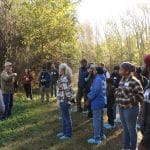
Top photo: Conference attendees at RSF keynote at 2016 SoCap (Social Capital Markets)