Approving a Thrice-Rejected Gas Pipeline
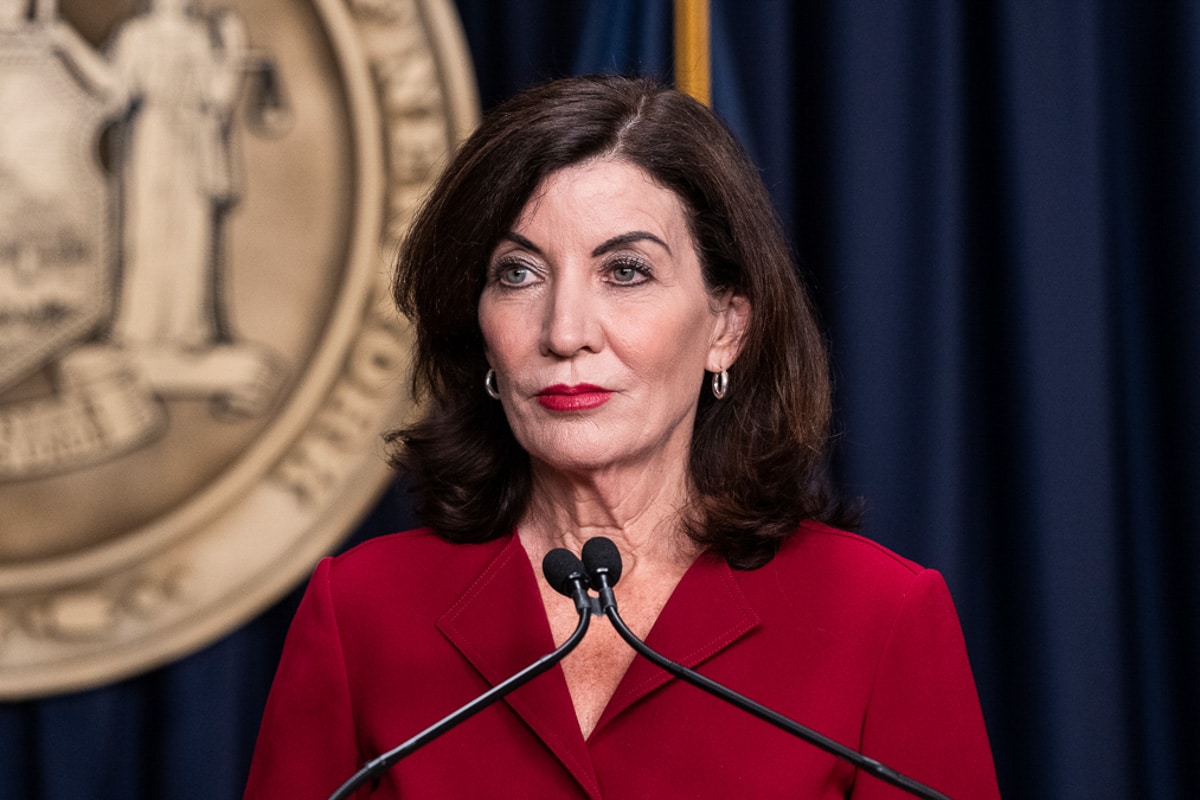
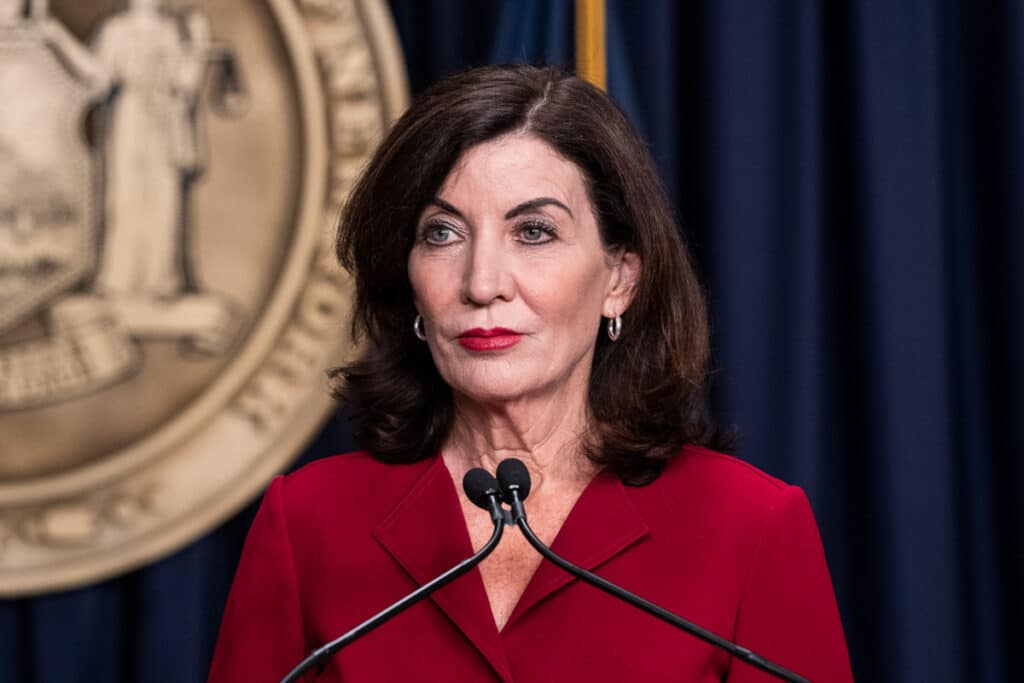
But almost immediately, accusations surfaced that the breakthrough came with strings attached. To secure the federal reversal, some said Hochul had agreed to reconsider the Williams Companies’ long-opposed Northeast Supply Enhancement (NESE) fracked-gas pipeline to supply New York City and Long Island. Hochul’s Administration approved the pipeline six months later, though the state had rejected it “three times in the past for failing to meet the state’s own water-quality standards,” U.S. Rep. Jerry Nadler said, and 10 New York members of Congress and 130 other New York officials had urged her to reject it.
Hochul denied any “quid pro quo,” but had begun pairing high-profile clean-energy wins with concessions to fossil fuel interests, asserting a need for lower costs and more energy reliability. Just this week, Hochul announced plans to spend $40 million to create “High-Demand Clean Energy Jobs… to support advanced nuclear energy in Upstate New York,” even though many climate advocates call nuclear power toxic, not “clean.”
“We need to govern in reality,” Hochul said. “We are facing a war against clean energy from Washington Republicans, including our New York delegation, which is why we have adopted an all-of-the-above approach that includes a continued commitment to renewables and nuclear power to ensure grid reliability and affordability.”
Another signal that Hochul was backtracking on her clean energy record emerged in court. In the spring, environmental groups, including the Sierra Club and WE ACT for Environmental Justice, sued the state, arguing that the Department of Environmental Conservation (DEC) had failed to implement the binding mandates of New York’s 2019 Climate Leadership and Community Protection Act (CLCPA). The plaintiffs won the first round in October, when a judge ruled that the state’s obligations were nondiscretionary and that it must proceed with long-delayed emissions regulations to meet the law’s requirement to cut greenhouse gas emissions by 40% by 2030.
Backtracking on State Climate Law
The implications are enormous. In court filings related to the CLCPA lawsuit, New York State estimated that meeting the law’s 2030 emissions mandates to cut greenhouse gas emissions 40% by 2030 and 85% by 2050 could cost ratepayers at least $44 billion — though environmental advocates argue the long-term costs of inaction are far higher, and others argue this figure is far too low. Still, the sticker shock felt real, especially in a political environment where voters increasingly tie high utility bills to political leadership.
Two days before Thanksgiving, Hochul’s administration filed a notice of appeal. The move effectively slows implementation and buys time. But it also positions the Governor to argue she is protecting consumers from premature or overly burdensome regulation.
Then came another controversial decision. The state allowed Greenidge Generation, a gas-fired power plant on Seneca Lake upstate, to continue operating its Bitcoin mining operation at higher emissions levels than permitted under previous draft permits. Environmental groups reacted swiftly, as did Hochul’s Democratic primary opponent, Antonio Delgado, who called the move “a double gut punch for New York and a setback for everyone fighting for a livable future.” Several environmental organizations endorsed him immediately.
Hochul defended the pipeline and Greenidge decisions as grounded in “reality” — specifically, rising energy demand, the pressure of consumer utility bills, and the need for reliability. These choices have placed her squarely inside the national trend of mainstream Democrats recalibrating climate action and leadership in response to growing affordability fears.
Will the Court Uphold New York’s Emissions Reduction Law?
Which brings us to 2026, when New York will face a political inflection point. The February 5, 2026, deadline to act on the CLCPA court ruling lands at the beginning of the election cycle. If the appellate court upholds the decision, Hochul’s administration will be required to issue regulations that could raise near-term costs for utilities, buildings, and industry — while upholding the state’s climate emissions reduction law. Delaying or weakening those regulations risks alienating climate-focused voters. Implementing them aggressively risks triggering an affordability backlash.
Mayor Mamdani, though limited in his formal authority over state energy policy, has an equally powerful tool: his uncanny ability to shape public opinion from the media capital of the world. Though Mamdani did not run on a climate platform, he is known for taking some pro–climate-justice positions, opposing new fossil-fuel infrastructure when he was an assemblyman, and supporting emissions-reduction mandates. He can continue to champion climate justice, call out perceived backsliding, and mobilize younger voters who feel the climate crisis viscerally.
New York City’s Energy Efficiency Law: An Early Test for Mamdani
While the CLCPA is largely shaped in Albany, Mamdani will face his own climate credibility test much closer to home: New York City’s Local Law 97. Buildings are the biggest carbon emitters in New York State, and this nation-leading law requires large co-ops, condo boards, and landlords to cut emissions and meet far stricter limits by 2030. The law is both one of the city’s most powerful climate tools and one of its most politically explosive, with compliance costs falling hardest on working- and middle-class homeowners, landlords, and their tenants. How Mamdani chooses to implement, secure funding for, adjust, or defend LL97 will quickly become a defining measure of his climate reputation, along with how he works with the real estate industry. His actions could determine whether his affordability message complements or clashes with his climate commitments.
Mamdani’s climate and affordability policies will be watched by many of the same voters who powered his surprise victory. Notably, Hochul will need these voters next November, especially after her underwhelming 2022 performance against a much less well-known Long Island Republican challenger who, ironically, now leads the U.S. Environmental Protection Agency (EPA).
The risks for Hochul are real. If younger, climate-motivated voters see her as retreating from hard-won progress, they might stay home again, or defect to her Democratic challenger, Lieutenant Governor Delgado, in the primary, especially in New York City. If older and middle-income voters see her as ignoring rising electricity costs, they might also stay home, or even defect to the Republican challenger next November. Hochul will need to convince both groups that affordability and climate action are not competing priorities but mutually reinforcing necessities. And she will need environmental advocates to speak up on her behalf and say the same.
That won’t be easy. But New Yorkers deserve leadership that acknowledges reality without surrendering ambition — or opportunity. The cost of electrification continues to fall, while the costs of fossil fuel pollution rise with every storm, flood, and known public health costs linked to emissions. New York has always prided itself on leading, not following, on climate. The next 11 months will test whether that reputation still holds.
Article by Victoria L. Harmon for Climate & Capital Media. She is the CEO and Founder of VL Harmon Advisors, a strategic communications and energy policy advocacy firm. She advises mission-driven clients like Alphabet’s X Moonshot, Rise Light & Power, and Convalt Energy. With a background spanning government, media, and corporate roles, she previously led communications for New York State’s clean energy team and held senior positions at Credit Suisse and Citigroup. Harmon began her career in public service and media, including roles with Senator Joe Biden and NBC News. She holds a JD from Georgetown and a BA from UC Berkeley.
Article reprinted with Permission as part of GreenMoney’s ongoing collaboration with Climate and Capital Media.