How the Cuban Missile Crisis Sparked a Career in Sustainable Investing: A Conversation with Cheryl Smith
Interview by Lisa Hayles
Trillium Asset Management
For decades, Cheryl Smith has been a leading voice in sustainable finance—shaping strategies that align investment returns with social and environmental impact. As an economist and portfolio manager at Trillium Asset Management, she has championed the integration of ESG principles long before they were mainstream. In this conversation for GreenMoney’s Women & Sustainable Investing issue, Cheryl reflects on her journey from academia to advocacy, what sustainable investing critics get wrong, and why values are never absent from investing.
The ‘Spark’
Lisa Hayles: Cheryl, you have a PhD in Economics, but moved away from academia early in your career toward sustainable investing. What first sparked your interest in these two fields?
Cheryl Smith: Economics, for me, was always about improving the world. I was educated by Benedictine sisters and Jesuits at Georgetown, and that shaped my belief that what matters is trying to make life better for others, especially those with less power. At Georgetown, I triple majored in economics, government, and history because you need all three to understand how societies work
My turn toward sustainable investing came from my focus on macroeconomics—the big questions like why some countries are wealthy, and others are not. I was influenced by Keynes, who believed the economy is more than the sum of individual decisions. That perspective made me question Milton Friedman’s view that issues such as economic justice and environmental concerns should be ignored.
LH: What led you from academic economics into portfolio management and sustainable investing?
CS: A big influence was the U.S. Conference of Catholic Bishops’ pastoral letter on the economy in 1986. I helped gather parish responses in Colorado, and everyone—from wealthy parishes to poorer ones—wanted to know how the archdiocese invested its money. That question reframed finance for me: asset ownership as a vehicle for improving the world.
Finding Trillium was a perfect fit. Joan Bavaria, our founder, was clear that sustainability and fiduciary responsibility could be partners. That was radical at the time, and I’ve spent my career proving it’s possible.
LH: Were there early influences — academic, personal, or world events — that pulled you toward this field?
CS: The Cuban Missile Crisis left a deep impression. We lived near a missile installation, and my parents told me, “If you hear the siren, grab your brother and sister and run.” That sense of systemic risk—forces beyond individual control—stayed with me. Later, anti-militarism became a big issue for me. I joined demonstrations against nuclear weapons and started thinking about companies’ exposure to weapons manufacturing.
LH: How did your economics training shape the way you approach impact and social responsibility?
CS: I was in graduate school during Reagan’s dismantling of social policy. Today, we see similar dislocation—the unraveling of global frameworks. Keynes taught that macroeconomics matters, and that ignoring externalities is a mistake. That systems view underpins sustainable investing: costs borne by society eventually affect markets.
LH: Over your career, you have led Trillium’s fixed income process and managed several ESG equity strategies. How would you describe your overall investment philosophy?
CS: I’m shaped by economics and monetary theory. I watch macro trends, policy shifts, and financial flows. I’m interested in bubbles and panics—moments of uncertainty that investors can’t quantify but that drive markets.
At Trillium, we integrate ESG insights with fundamentals. We look for companies with strong workplace practices, safe products, environmental stewardship, and respect for human rights. ESG helps us avoid big potholes—management teams that get tunnel vision and treat people as tools.
Advocacy and Influence
LH: At Trillium, we often talk about our belief that ‘Impact is Active.’ Could you explain how you understand that and how it works in practice?
CS: At Trillium, the tagline “Impact is Active®” reflects our core philosophy, integrating Environmental, Social, and Governance (ESG) factors into financial analysis and using active ownership (shareholder engagement) to drive positive change and long-term value. Simply put, we believe that true impact comes from actively influencing companies and policy. To achieve this impact, we use a range of tools, including proxy voting, shareholder proposals, direct dialogue, and public policy. We vote against non-diverse boards of directors, and we say no to CEO packages that are too large and not linked to sustainability performance. In 2024, Trillium conducted almost 300 engagements from challenging companies to improve their oversight of AI to ensuring access to reproductive healthcare for all employees, no matter where they might be based in the United States. You can read more about our work in Trillium’s Firm-Wide Impact Report.
ESG Backlash
LH: Sustainable investing has faced increased attacks in recent years. What are critics missing?
CS: The backlash is a sign we’re having an impact. We’re challenging the idea that investing can be “values-free.” We have successfully used shareholder engagement tools to help companies adopt credible, robust strategies that address climate change, gender equity, human rights, pollution, and more. Much of the criticism is really masking resistance to a rapidly changing world and a reluctance to challenge outdated business practices. These political critiques and attacks make it even more essential for investors to speak out clearly in support of policies and actions that, in our view, support a more prosperous, inclusive, and sustainable economy. Critics miss that sustainability is a viable framework for understanding risk. Externalities matter—costs to one entity affect the whole system.
LH: How do you approach concerns about performance or the value of sustainability analysis?
CS: Concerns about performance often assume sustainability analysis is a trade-off, but that hasn’t been my experience. Performance is still primarily driven by broad market and style factors—whether a company is growing, generating quality earnings, or trading at an attractive valuation. ESG analysis adds nuance by helping us identify risks and structural challenges that fundamentals alone may miss, especially over longer time horizons.
Leadership and Advice
LH: You’ve chaired US SIF and served on several influential boards. Who shaped your thinking and leadership style?
CS: Joan Bavaria, absolutely. Her vision and impact on capital markets through her advocacy for integrating social and environmental values into investing were truly genre-shifting. Of course, she also co-founded non-profits supporting sustainable investing, including Ceres and the USSIF. The Joan Bavaria Award honors her legacy. Another important influence was economist Hyman Minsky, whose Financial Instability Hypothesis taught me how economies move from periods of stability to instability, with leverage and liquidity driving cycles.
My leadership style is inclusive. I listen, encourage input from quieter voices, and recognize contributions. As a woman in finance, you get used to not being heard—so I work to create space for others.
LH: What advice do you share most often with women entering sustainable investing?
CS: Pick your battles and grow a thick skin! This is a marathon, not a sprint. Stay grounded, don’t take yourself too seriously, and remember why you’re here: to make a difference.
Future Vision
LH: After such a long view of the industry, what excites you most about the next decade of sustainable investing?
CS: I’m excited by how far the field has come in recognizing the importance of social foundations. Better data and disclosure allow us to incorporate issues such as supply chain resilience, pay equity, and workforce stability into investment analysis—not as peripheral concerns, but as core drivers of long-term value. A truly sustainable economy depends on systems that enable people to participate fully and thrive. I’m optimistic that greater investor collaboration will help direct capital toward the conditions for shared prosperity.
LH: If you could offer one prediction — or one hope — about the future of responsible investing, what would it be?
CS: That we stop pretending investing is values-neutral. Values are always present. Our job is to make them explicit and use the power of assets responsibly.
Cheryl Smith’s career underscores a truth often overlooked in finance: investing is never values-free. From her early lessons in systemic risk to her decades of leadership at Trillium, she has shown that aligning capital with justice is not only possible but also essential. For Smith, the mission remains clear: use every tool—including capital—to improve others’ lives.
Interview by Lisa Hayles, Trillium Asset Management
More about the Author and Interviewer:
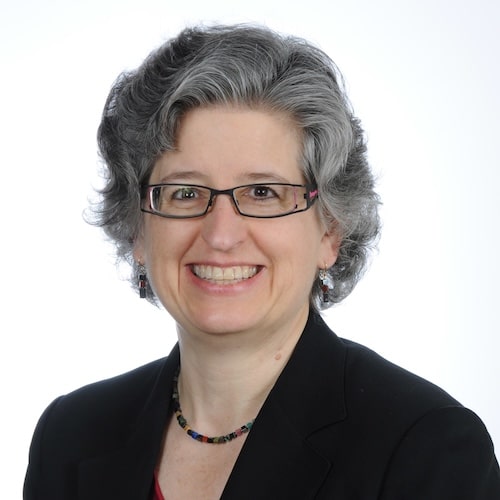
Cheryl Smith is an Economist and a Portfolio Manager for the ESG Large Cap Core strategy. She is also a member of the Trillium U.S. Board. Cheryl began her investment management career in 1987 at Franklin Research & Development, now known as Trillium Asset Management. She returned to Trillium in 1997 after she served as Vice President at what is now known as Boston Trust Walden, where she provided equity analysis and managed two mutual funds as well as individual client portfolios. From 1982-1986, she was Assistant Professor of Economics at the University of Denver, Denver, Colorado.
Cheryl is a CFA® Charterholder. She earned a Ph.D., M. Phil., and M.A. in Economics from Yale University and a B.S. Foreign Service from Georgetown University. She is an active member of CFA Society® Boston. She is a Member of the Trillium US Board, and the former Chair of the Trillium Advisory Board. She is a member of the American Economic Association and the Boston Economics Club. She serves on the Advisory Board of the Environmental League of Massachusetts and on the Women Fighting Hunger Committee of the Greater Boston Food Bank.
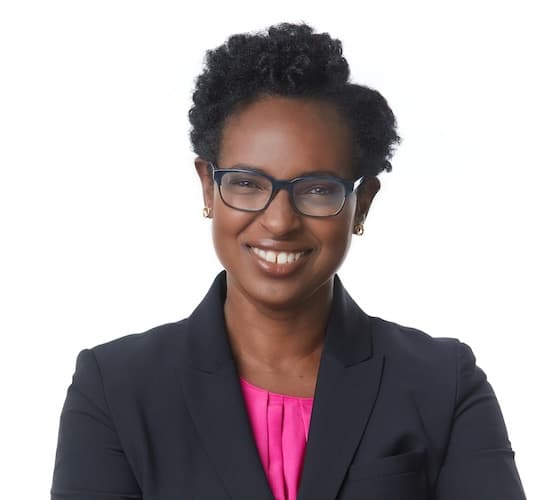
Lisa Hayles is Director of Sustainability and Stakeholder Engagement at Trillium Asset Management, responsible for integrating sustainable practices across the organization and ensuring effective communication with stakeholders. Lisa joined Trillium in the summer of 2020 and has held roles in the private client and advocacy teams. She has more than 20 years’ experience working across research, advisory, client service and stewardship functions within the sustainable finance industry in North America and Europe. A frequent speaker on gender equality and racial justice, she is co-founder of the Racial justice Investing Coalition and sits on the board of the Interfaith Center for Corporate Responsibility.
Lisa received her B.A.in Political Science and History from the University of Toronto and a M.Sc. in International Development from the University of Guelph. She also holds a French language Certificate for the University of Toulouse in France. Lisa is honored to be included among the YW Boston’s Academy of Women Achievers for 2025.
Important Disclosure Information
Information and opinions expressed are those of the author and may not reflect the opinions of other investment teams within Trillium Asset Management. Information is current as of the date appearing in this material only and is subject to change without notice.