Extractive industry projects may not be created to victimize women, but violence against women has become a major by-product of these project operations. Rampant exploitation of women happens when thousands of mostly male workers are housed in makeshift “man camps” located at the sites of company operations. For example, North Dakota’s Bakken oil field has boomed—over the past five years, it has increased daily oil production from 200,000 barrels to 1.1 million barrels, becoming the second largest oil-producing state in the country. Thousands of highly paid workers have flocked to the region. Within two years, the combined influx of cash and oil workers has tripled the rate of murders, aggravated assaults, and robberies. [1] Sex crimes, rape, prostitution, and human trafficking have increased by 20.2 percent. Business Insider summarized the region thusly: “law enforcement says Bakken is a made-to-order market for sex”. [2]
Violence against women is widespread across extractive industry site operations. It is social pollution as toxic as any chemical released into the environment. Yet in the SRI community, of the three principal criteria—environment, social, and governance—social metrics are proceeding the slowest in terms of measuring impact, corporate accountability, and investor risk. Currently, the Securities and Exchange Commission does not require corporate securities reporting on community relations or human rights due to their perceived lack of material relevance.[3] However, just last year, Ernst and Young elevated the “social license to operate” to the third place on its list of the greatest business risks to the mining industry.[4] John Ruggie, author of the UN Guiding Principles on Business and Human Rights (the Guiding Principles), told Business Ethics that “for a world-class mining operation…there’s a cost somewhere between $20 million to $30 million a week for operational disruptions by communities” and that the time it takes to bring oil and gas projects online has “doubled over the course of the past ten years, creating substantial cost inflation”. Additionally, “analysis by Environmental Resources Management of delays associated with a sample of 190 of the world’s largest oil and gas projects (as ranked by Goldman Sachs) found that 73% of project delays were due to “above-ground” or non-technical risk, including stakeholder resistance”.[5]
The problem is that current efforts to engage the private sector on human rights are largely driven by the Guiding Principles, which offer a rigidly “top down” framework that does not account for local dynamics such as the cumulative impacts of multiple companies operating in close proximity to a community, or the spikes in violence against women.
Furthermore, the Guiding Principles mention women, along with Indigenous Peoples, only in passing, thereby largely excluding them from the corporate social responsibility conversation. The resulting lack of guidance and metrics enables companies to disclose minimal information about their social impacts—especially on vulnerable groups—which limits investors’ ability to measure social risks and keeps nefarious social costs invisible and running rampant.
 Published in November 2014, First Peoples Worldwide’s Indigenous Rights Risk Report (IR3) offers a case study for measuring one of the most pressing social risks to the extractive industries—Indigenous Peoples’ rights—from the bottom up. Designed over a two year process with input from Indigenous leaders and activists, financial analysts, and industry experts, IR3 assessed 52 US oil, gas, and mining companies to identify where their projects overlap with or impact Indigenous Peoples, and rated each project’s risk exposure for failing to obtain Free, Prior, and Informed Consent (FPIC). FPIC is recognized in the UN Declaration on the Rights of Indigenous Peoples as Indigenous Peoples’ right to give or withhold support to corporate activities that affect them. Eighty-nine percent of the 330 projects assessed had medium to high-risk exposure (a searchable database of the scorecards is available on First Peoples’ website at http://firstpeoples.org/wp). By assigning quantitative risk scores at the project level using a methodology designed to capture the complex undercurrents within both communities and companies, IR3 provides a framework—and three key lessons—for designing social metrics that can be applied beyond just Indigenous Peoples.
The first lesson is that the results of preliminary back testing indicate a possible correlation between the companies’ average project risk scores and their market growth between 2010 and 2014. Companies with lower average project risk scores outperformed companies with higher average project risk scores by 4.21 percent. There are some caveats to this figure resulting from our small sample size, but it’s an important step in demonstrating the connection between corporate social and financial performance.
The second lesson is that most companies operate with no governance structure whatsoever for addressing social risks. One of IR3’s risk indicators is Risk Management, which rates a company’s capacity to identify, manage, and mitigate social risks at the board level. Forty-eight of the 52 companies have virtually nothing in this regard. They have no board committees with community relations or human rights in their mandate, or board members with community relations or human rights expertise. Without the governance structure or company capacity to identify, manage, and mitigate social risks, investors are left with a Management by Headlines approach, and virtually all communities that host or are proximate to extractive projects are in danger—as we’ve seen in case after case of violence against women.
Reports of Native American women and girls being trafficked to the Bakken has put the Fort Berthold Reservation on high alert, but how are the companies operating in the region responding? They’re not. Companies (http://bakkenshale.com/companies) including Apache, ConocoPhillips, ExxonMobil, Hess, and others[6] have taken zero responsibility for their workers’ collusion in the growing sex trade, increased drug violence, and general crime wave in Fort Berthold over the past two years, let alone the rest of the region. While some companies in the region are making efforts to reduce flaring and improve transparency, no substantive dialogue is taking place about social impacts. This trend of neglecting social risks (http://firstpeoples.org/wp/?s=bakke) has permeated corporate interactions with communities across the globe.

Indigenous women protest the situation facing Papuans.
Source: Oceania Interrupted;
Photography: Sangeeta Sing
Other examples include the Democratic Republic of Congo, where Anvil Mining allegedly provided transportation (planes and vehicles) to the Congolese Armed Forces as they raped and tortured civilians near its Dikulushi copper mine. [7] In Papua New Guinea, Barrick Gold protects its Porgera gold mine with a private security force of nearly 450 personnel. As of 2013, at least 170 women have allegedly been raped by these officers. [8]Barrick implemented a remediation plan for victims after a scathing report was published by Human Rights Watch, emblematic of the aforementioned Management by Headlines approach. In 2010, the lone women’s shelter in the oil sands boomtown of Fort McMurray, Alberta became so overcrowded that the executive director held a three-week hunger strike to draw attention to its desperate need for greater support. [9]Local news sources cite the town as an epicenter of HIV and other sexually transmitted diseases coinciding with an uptick in prostitution. In Oklahoma, a legislative panel found a “boom in child sex trade linked to the convergence of major oil trucking routes outside and near Oklahoma City”. Because companies resist correcting their systemic operational failures to address the social risks of their operations, thousands of women and children are facing sexual assault and violence. The exploitation of women is ubiquitous.
There is no doubt that each of these communities is paying a heavy price. Now is the time for investors to take a serious look at the financial, legal, and reputational consequences incurred by the companies that perpetrate them. IR3 demonstrates a reasonable likelihood that there are measurable business implications associated with the treatment of communities. While more work is needed to understand social risks more fully, in no way does this make them less material, and First Peoples is spearheading several initiatives to bring “S” up to speed with “E” and “G.” This circles back to the third lesson, which is that efforts to capture social costs must include place-based accountability and be informed by local context. Without place-based accountability to the communities where the negative effects of corporate development are most directly felt, social metrics will continue to exist only as high-level, “aspirational” guidance that fails to elicit positive change on the ground.
We are partnering with academic researchers to pilot a “True Costs Collaboratory” that will use participatory data gathering to create an inventory of community impacts of resource extraction in Appalachia, the Dakotas, the Mississippi Delta, and Alaska. The inventory will then be used as the basis for quantifying the social costs that are currently unaccounted for. We also intend to expand IR3 to Canadian oil, gas, and mining companies, whose widespread disregard for human rights—both domestically and abroad—has attracted global scrutiny.[10] We’ve established a valuation advisory committee comprised of ESG analysts from major SRI firms as well as two mining companies. The committee played a key role in helping to design the IR3 methodology, and continues to advise the back testing and other next steps. Finally, we’re partnering with four other Indigenous organizations to establish Shareholder Advocacy Leadership Training (SALT) Centers in Argentina, Canada, and Mexico. The SALT Centers will be positioned to facilitate linkages between investors and Indigenous Peoples in their respective regions, giving investors access to credible and real time data on corporate social performance directly from communities.
Moving forward, we plan to bring women’s groups such as Equality Now and the Alliance to End Slavery and Trafficking into the discussion, to raise awareness of extractive industry ties to the sex trade and the need for better social metrics to protect Indigenous and non-Indigenous women alike. This holds especially true as FPIC expands beyond Indigenous Peoples to include all communities demanding a voice in development activities that impact them.
To learn more about these efforts or if you’re interested in playing an active role, please contact Nick Pelosi at npelosi@firstpeoples.org
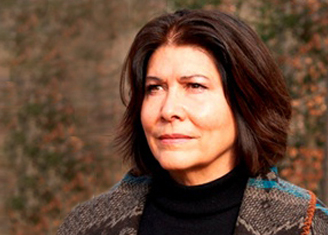
Article by Rebecca Adamson, an Indigenous economist, Founder and President of First Peoples Worldwide (www.firstpeoples.org), the first US based global Indigenous Peoples NGO, which makes grants and provides technical assistance and advocacy directly to Indigenous-led development projects. Ms. Adamson has worked directly with grassroots tribal communities, both domestically and internationally, as an advocate of local tribal issues since 1970.
She established the premiere US development institute, First Nations Development Institute in 1980 and in 1997 she founded First Peoples Worldwide. Ms. Adamson\’s work established the first micro-enterprise loan fund in the United States, the first tribal investment model, and, a national movement for reservation land reform. Her work established a new field of culturally appropriate, values-driven development, which led to legislation that established new standards of accountability regarding federal trust responsibility for Native Americans. She currently serves on the Board of Directors for the Bay and Paul Foundations and the Calvert Social Investment Fund. As a trustee of Calvert, Rebecca partnered with the Fund to create the first Indigenous Peoples\’ rights investment screen in 1999, and led the creation of the Indigenous Rights Risk Report, the first quantitative assessment of corporate risk exposure to Indigenous Peoples\’ rights, in 2014.
In 2015 she has established four Shareholder Advocacy Leadership Training Centers located in Argentina, Mexico and Canada as a new strategy for Indigenous leaders in addressing extractive industry on Indigenous territories. She was appointed as an advisor to the U.S. Extractive Industries Transparency Initiative Multi-Stakeholder Group, serving from 2014 to the present. She holds a Masters in Science in Economic Development from Southern New Hampshire University (formerly New Hampshire College) in Manchester, New Hampshire, where she has also taught a graduate course on Indigenous Economics within the Community Economic Development Program, and a Doctor in Humane Letters degree from Dartmouth College.
Contact: Rebecca L. Adamson, First Peoples Worldwide
Work Phone: (540) 899-6545 or Email: radamson@firstpeoples.org
Article Reference Notes:
[1] http://www.washingtonpost.com/sf/national/2014/09/28/dark-side-of-the-boom
[2] http://www.businessinsider.com/sex-traffickers-in-the-oil-patch-2015-3
[3] http://www.ey.com/GL/en/Industries/Mining—Metals/Business-risks-in-mining-and-metals
[5] http://www.bsr.org/reports/BSR_LocalContent_March2011.pdf
[6] Other companies in the Bakken include Arsenal Energy, Continental Resources, Earthstone Energy, Emerald Oil, Enerplus, EOG Resources, Forestar Group, Halcon Resources, Kodiak Oil and Gas, Linn Energy, Marathon Oil, MDU Resources Group, Newfield, Norstra Energy, Northern Oil and Gas, Oasis, Occidental Petroleum, Penn Virginia Corporation, Petro-Hunt, Petro-Quest, Prima Exploration, Questar, Resolute Energy, Samson Resources, Slawson Exploration, SM Energy, Statoil, Triangle Petroleum, US Energy, Whiting Petroleum, WPX Energy, XTO, and Yuma.
[7] http://business-humanrights.org/en/anvil-mining-lawsuit-re-dem-rep-of-congo
[10] http://www.coha.org/canadian-mining-in-latin-america-exploitation-inconsistency-and-neglect/