Sheconomy: What Happens When Women’s Financial Power Shapes the Economy
By Janine Firpo
Invest for Better and Sheconomy
What if more people had solar panels than smartphones? What if ocean plastics had nearly vanished by 2005? What if an additional $2 trillion flowed into social and environmental solutions every year — not as charity, but as disciplined investment?
These questions are not fantasies. They are economic thought experiments grounded in data, and they lead to a deeper question, one that feels especially urgent today:
What happens when women shape capital at scale?
We are living through the largest intergenerational wealth transfer in history. Over the next two decades, an estimated $84 trillion will change hands.1 A defining feature of this transition is that women are expected to control a majority of that capital through inheritance, earnings, entrepreneurship, and leadership.
At the same time, the global economy is confronting climate instability, widening health gaps, and technological disruption. The systems we depend on are under pressure. The question is not simply how much capital is moving, but what that capital will prioritize.
For most of modern financial history, women had limited influence over capital allocation, not because of a lack of capability or ambition, but because of structural exclusion. In the United States, women could not open bank accounts independently until the 1970s. Representation in venture capital, corporate boards, asset management, and economic policy has improved, but remains uneven.
Markets evolved largely without women’s full economic voice. That absence shaped outcomes.
Today, the landscape is changing. Women are inheriting wealth, founding companies, leading institutions, and participating more actively in investment decisions. Yet global economic equality remains far from guaranteed. The World Economic Forum estimates that at the current pace, gender parity is still more than a century away.
Economic equality will not arrive automatically. It must be built, and that is precisely why this moment matters.
Capital allocation is one of the most powerful forces in the modern economy. It determines which technologies scale, which risks are tolerated, which business models flourish, and which problems receive urgency. When the composition of capital allocators shifts, so do the signals markets receive.
Research consistently shows that, on average, women approach environmental and social considerations differently at scale. Women are 12 percentage points more likely than men to express serious concern about climate change. Women scientists allocate approximately 25 percent more research funding to sustainability-focused solutions. Women purchase 27 percent more sustainable products. Countries with greater gender equality in government enact 18 percent more environmental policies.234
These are not abstract attitudes. They are economic inputs.
Now imagine that women had been equal participants in capital markets since 1925: equal numbers of investors, executives, startup founders, and financial decision-makers at home.
It is not difficult to see how billions more might have flowed earlier into renewable energy research. Cost curves might have crossed sooner. Solar grid parity could have arrived years earlier.
In our timeline, smartphones defined the 21st century. In a gender-balanced capital timeline, solar panels might have spread across rooftops just as quickly. The image is striking: more households own solar panels than iPhones, but the mechanism is straightforward. Capital follows priorities. Priorities shape technological timelines.
The same logic applies to plastics. Marine plastic pollution currently causes an estimated $13 billion in annual environmental damage.5 In a world where women held equal influence across corporate boards, regulatory agencies, and investment committees decades earlier, it is reasonable to imagine earlier funding for biodegradable materials, stronger packaging regulation, and faster growth of circular economy models.
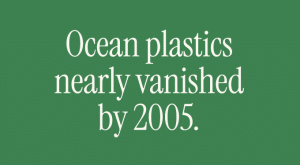
The Sheconomy thought experiment suggests a provocative headline: ocean plastics almost vanished by 2005.
The point is not perfection. It is timing.
Earlier representation leads to earlier prioritization, and earlier prioritization leads to earlier innovation. Over the decades, those differences compound.
Sustainability is only part of the story.
When capital reflects lived experience, entire categories of value come into sharper focus. For decades, markets have underpriced issues that disproportionately affect women and families, from health research gaps to caregiving infrastructure to financial products built around real household complexity.
These were not invisible because they lacked economic potential. They were invisible because they lacked influence.
Closing the global women’s health gap alone could add an estimated $1 trillion to the global economy annually by 2040. Yet innovation in this space has historically received a fraction of the funding it warrants. The constraint has not been performance; it has been priority.
Women currently control roughly 32 percent of global private wealth. Research shows that women invest 11 percent more of their portfolios in social impact funds than men and donate a higher percentage of their income annually. If women held 50 percent of global private wealth and reinvested even a portion of it in line with existing allocation patterns, over $2 trillion more could flow each year into social and environmental solutions.
This is not about generosity. It is about allocation at scale.
When half the world controls half the capital, markets recalibrate.
None of this suggests that women are morally superior investors. It suggests something more practical: lived experience shapes perception of risk, opportunity, and unmet need. Markets are efficient only to the extent that they see clearly. Expanding who allocates capital expands what gets seen.
What makes this moment distinct is not only that women’s financial influence is growing, but also that the stakes of capital allocation have become materially visible. Investors increasingly recognize that resilience, inclusion, and sustainability are not peripheral concerns, but drivers of long-term performance.
And yet, the path toward equal economic power is not automatic.
The World Economic Forum’s projection that parity remains more than a century away is not a forecast to accept. It is a call to action. Economic equality is not the finish line. It is the starting point.
Sheconomy is built on that belief.
It is not a financial product or an investment strategy. It is a public awareness campaign designed to make women’s financial power visible and collective. Because when power is visible, it becomes intentional.
When it becomes intentional, it becomes directional.
The wealth transfer underway is historic. But wealth alone does not transform systems. Participation does. Representation does. Conscious allocation does.
We do not have to accept a future in which economic equality drifts slowly toward 2125. Markets are shaped by decisions made every day — in boardrooms, investment committees, households, and policy circles.
The future is not predetermined. It is allocated.
The coming decades will determine whether climate risk is managed through deliberate transition or imposed through disruption. They will determine whether health systems reflect the needs of half the population. They will determine whether capital reinforces short-term extraction or long-term resilience.
Women now stand at an unprecedented point of financial influence. What happens next depends not only on who holds the money, but on how consciously that influence is exercised and how fully economic participation is expanded.
The alternate headlines of Sheconomy are not predictions. They are reminders that markets could have moved sooner. Different signals produce different outcomes, and timing matters.
Economic equality will not happen without work. But when women shape capital at scale, the ripple effects are structural.
We shape the economy by shaping where capital flows. And for the first time in modern financial history, women have both the scale and the opportunity to help decide how it flows.
The question is not whether the future will be different. The question is who will shape it.
This public awareness campaign is designed to make women’s financial power visible, collective, and directional. Through the Sheconomy 100-Day Challenge, participants explore how their capital, voice, and influence can accelerate equality, strengthen communities, and support long-term resilience in markets and society.
If this moment resonates with you, I invite you to learn more and join the 100-Day Challenge here. Follow and share the campaign on social media to help expand the conversation about how economic power shapes our world:
Article by Janine Firpo, who is a values-aligned investor and social innovator. In 2017, she left a successful 35+ year career in technology and international development to focus on how women can create a more just and equitable society through their financial investments. Her book, Activate Your Money, was published in May 2021. Later that year, Janine co-founded Invest for Better, a non-profit organization that helps women invest their money in ways that align with their values. In 2024, Forbes named Janine one of “50 Over 50” female leaders who continue to make an impact later in life.