Why a Perpetual Purpose Trust Model Works for Sustainable Investing Firms
By Carrie VanWinkle and Sylvia Panek
Natural Investments
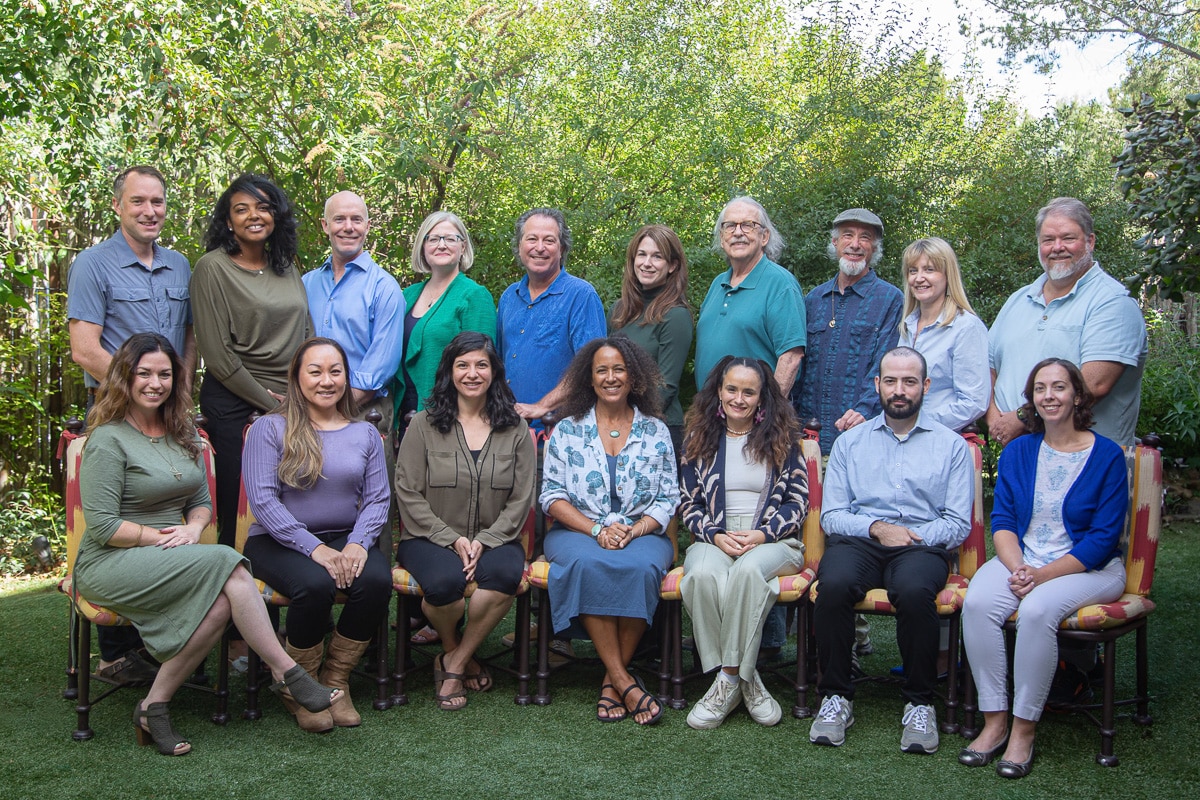
Two years ago, Natural Investments became the first U.S. financial advisory firm to convert into a Perpetual Purpose Trust. This was more than a legal milestone—it was an ethics-driven decision about leadership, equity, and mission in an industry struggling to align growth with values.
A Perpetual Purpose Trust (PPT) is a non-charitable, irrevocable trust created to steward a business in service of a clearly defined purpose. In our case, the newly formed Natural Investments Purpose Trust purchased the firm from six senior advisors who had owned the business under a traditional partnership model. From that moment forward, the company ceased to be something that could be bought and sold on the open market. Instead, it became permanently held in trust for its mission.
For a firm focused on sustainable, responsible investing, this mattered.
We hired legal and financial consultants to help us navigate the complexities of creating the trust, rewriting our bylaws, and restructuring governance. Internally, a cross-functional governance committee worked for months to shape the trust agreement and operating framework. Sylvia served on the governance committee, while Carrie was elected to the first Trust Steward Committee—the leadership body of the new trust—and each of us has come to appreciate just how much time, emotional labor, and organizational commitment this transition truly requires.
It has been demanding work. It has also been some of the most meaningful leadership work of our careers.
Why Our Old Ownership Model No Longer Works
Natural Investments was founded over four decades ago by a father-and-son team and by 2017 had grown from two owners to six. As our assets under management approached $2 billion and our team grew, our internal demographics shifted. More women joined the firm. More advisors and staff members from historically marginalized communities joined the team.
Our leadership structure, however, did not evolve at the same pace.
By 2022, our leadership group remained overwhelmingly white, male, and over fifty. This was not due to a lack of talent or ambition among our newer colleagues. It was the predictable outcome of the typical ownership structure in financial services.
In most advisory firms, ownership equals leadership, usually accessed through personal wealth, the ability to take on debt, or both. Buying into a firm can require borrowing tens or hundreds of thousands of dollars. For many younger advisors, women, and advisors of color, that barrier is insurmountable.
Even for those who might qualify for financing, the personal risk can be disproportionate. Student debt, family responsibilities, and generational wealth gaps all shape who can realistically step into ownership. The result is a leadership pipeline that quietly but powerfully reproduces itself.
At the same time, our existing partners faced a very real succession challenge. The firm had more than doubled in size in a decade, with several partners approaching retirement. Under a traditional model, the next generation of leaders would be expected to buy out their equity stakes.
But the firm had become too successful for an internal succession to work. None of the newer advisors could reasonably purchase those shares. Yet, outside buyers—private equity firms and large financial institutions—were calling regularly.
As Michael Kramer, one of our senior leaders, put it, “We had become a victim of our own success.”
For values-driven firms, this moment is familiar. When outside capital comes calling, it often arrives with generous offers and reassuring language about preserving culture and mission. For founders who have spent decades building something meaningful, the prospect of a comfortable retirement and reduced responsibility is hard to resist.
But the history of mainstream capitalism is clear: when profit is the primary governing force, purpose inevitably becomes secondary.
Natural Investments has always been rooted in a broader understanding of what investing can and should do. From the beginning, our firm was committed to helping clients align their money with their values—supporting personal financial well-being while intentionally shifting capital away from harmful industries and toward companies working toward a more just and sustainable future.
We were not willing to risk that mission.
Because a Perpetual Purpose Trust cannot be sold, it removes the temptation to exit through acquisition. It also eliminated the need to rely on outsiders to finance the transition. The trust itself became the buyer. The company became stewarded rather than owned.
This change led to more aligned opportunities.
Why We Chose a Perpetual Purpose Trust
Becoming a Perpetual Purpose Trust (PPT) delivered three essential benefits: broader and more inclusive leadership, durable protection of our firm’s purpose, and a clear path for succession aligned with our culture.
First, it ensures leadership is accessible to a more representative group, promoting broader participation and diversity of perspectives.
Advisors do not need to take on personal debt or bring private capital to participate in governance. Power is shared through an elected, term-limited stewardship committee that rotates rather than through static ownership percentages.
This procedural change has a cultural impact.
When access to leadership is no longer filtered through wealth, we create space for different lived experiences, perspectives, and priorities to inform decision-making. We are already seeing how this changes conversations around workload, client relationships, professional development, and long-term strategy.
For women and BIPOC advisors in particular, this structural shift matters. It signals that leadership is not something reserved for those who already have financial privilege. It affirms that expertise, integrity, and a commitment to clients define leadership.
Second, the trust structure safeguards our firm’s core mission, making our commitment to values legally binding and less susceptible to change over time.
From the beginning, Natural Investments has been grounded in the idea of “investing with the heart.”
A trust built around purpose makes that commitment legally durable. Our mission no longer depends on the preferences of individual owners or future acquirers. It is embedded in the organization’s governing DNA.
Just as importantly, the trust structure allows that mission to evolve. Bringing a more diverse group of leaders into stewardship of the firm allows our vision of impact-aligned investing to grow in response to rapidly changing social, environmental, and economic realities.
Third, the PPT addresses succession by providing continuity and stability, enabling leadership transitions without sacrificing the firm’s culture or core values.
Succession is one of the most destabilizing moments in any professional services firm. The new trust allowed senior partners to transition responsibly without requiring newer colleagues to shoulder untenable financial burdens. It provided stability for long-standing leaders while creating a clear pathway for emerging leaders to step forward.
What This Change Has Required From Us
It would be misleading to describe this transition as simple.
A Perpetual Purpose Trust does not automatically produce equity, inclusion, or a healthy culture. It creates a structure that makes those outcomes possible—but only if the organization is willing to do the work.
For those of us serving in governance roles, the learning curve has been steep. We are building new decision-making processes, learning how to balance operational leadership with stewardship responsibility, and navigating disagreement and ambiguity together. What feels different—and profoundly hopeful—is that the structure itself now reflects the kind of global culture we are trying to build.
The Role of Legacy Leadership
It is also important to name what made this transition possible.
Not every founding leader is willing—or able—to share power meaningfully. Our original leadership team, including Jack and Hal Brill and long-standing owners and managers Christopher Peck and Michael Kramer, approached this transition with a vital kind of openness.
They were willing to acknowledge that the firm they had built needed to change to remain aligned with its values. They were willing to relinquish a degree of control in service of something larger than individual legacy.
Jack and Hal Brill
That kind of leadership humility is rare. It deserves recognition.
What We Are Seeing Now
Two years into operating as a Perpetual Purpose Trust, the most meaningful changes are not visible on a balance sheet.
They show up in who speaks in meetings—and who is heard.
They show up in how we design leadership pathways and professional development.
They show up in a growing sense of shared responsibility for the firm’s future.
For women and advisors of color in particular, the signal is clear: leadership is not something you must purchase. It is something you grow into—and something the organization is now structurally committed to supporting.
We are still learning and building the muscle of collective stewardship.
But the early results suggest that removing wealth as the gateway to power unlocks a far richer leadership ecosystem.
A Growing Movement
Perpetual Purpose Trusts remain relatively new in the United States, but interest is growing quickly—particularly among mission-driven companies seeking alternatives to acquisition and private equity exits. The Purpose Trust Ownership Network is a great resource for firms with similar ownership challenges.
For us at Natural Investments, it became increasingly clear that we needed to build a firm that reflected those same commitments—inside our own walls.
A Perpetual Purpose Trust alone does not ensure a just or inclusive firm. But it decisively sets the stage. For Natural Investments, the move was not just structural; it was a stand for lasting integrity. Now our task—and our commitment—is to build that future, every day.
Article by Carrie B. VanWinkle of Natural Investments and Sylvia Panek of Natural Investments
Carrie B. VanWinkle, CFP®, CeFT®, helps women and couples empower their money for good through her work as a socially responsive investment advisor at Natural Investments. She hosts theSmart & Soulful Money® podcast, where she explores the intersection of money, feminism, activism, spirituality, and sustainability.
Sylvia Panek is a financial advisor at Natural Investments and manager of the Heart Rating of socially responsible funds. Her career has focused entirely on assisting individuals concerned about people and the planet by influencing change through sustainable investing.